


Missha's 816% US TikTok Shop Jump: Why the Cardi B Video Is the Third Thing That Happened
Able C&C reported on 9 August that Missha's US TikTok Shop sales rose 816% in January through July year on year, and attributed the surge to a Cardi B video. But the same company disclosed on 6 July that first-quarter US TikTok Shop sales were already up 3,199% — before that video went up. The sequence matters, because it moves the explanation from celebrity reach to two years of distribution and product decisions, the most important of which was shipping the BB cream in ten shades.

What did Able C&C actually announce on 9 August 2026?
Able C&C said Missha's US TikTok Shop sales rose 816% in January through July against the same period last year — a little over ninefold on that one channel. The company credited a TikTok video in which Cardi B used its products. Able C&C says the video passed 10 million cumulative views across TikTok and Instagram inside a week, and that the bundle pairing the M Perfect Cover Serum BB Cream with the Glow BB Boomer rose 329% in the seven days after it went up, against the week before.
Every trade outlet will file that as a celebrity story. The company's own numbers say otherwise, and they said it five weeks ago.
Why does Missha's Q1 2026 figure undercut the Cardi B explanation?
On 6 July, Able C&C disclosed that Missha's US TikTok Shop sales in the first quarter of 2026 were up 3,199% year on year. First quarter. Before the video.
The channel was already compounding at a rate that makes 816% over seven months look like a deceleration. Almost nobody in English picked it up, because a number without a famous person attached to it does not travel.
What is the actual sequence behind Missha's US growth?
Put the chain in order and the arrow reverses.
November 2024: the M Perfect Cover Serum BB Cream launches on Amazon.com and, according to KED Global, reaches No. 1 in the Hot New Releases – Face Makeup category inside its first month.
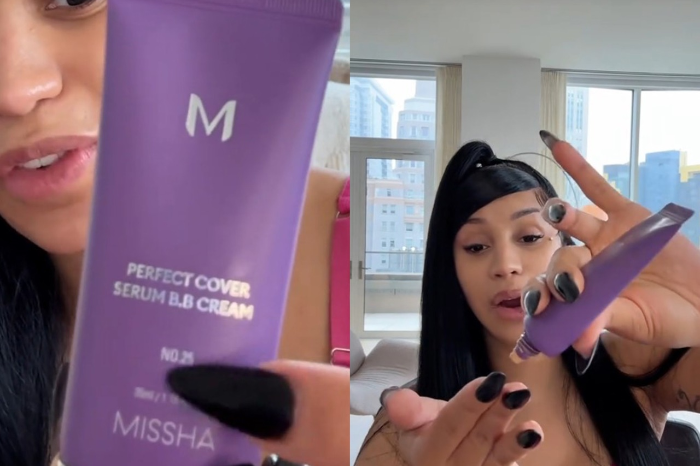
July 2025: Cardi B posts a two-minute TikTok holding it — "This isn't foundation, it's BB cream" — and says she has recently been using it as her base makeup. That video drew a million views in seven hours and 530,000 likes in a day.
June 2026: Missha shows up in person at TikTok Shop's K-Beauty Collective in Dallas, where the company says about 3,000 creators and consumers came through its booth and more than 200 pieces of review content were generated on the event hashtag.
Somewhere across that period the brand lands Ulta Beauty's online store, simultaneous Costco entry in the US, Canada and Taiwan, and shelf space in Olive Young's US stores.
Then, in 2026, Cardi B posts about the same BB cream again.

Why does a repeat endorsement mean something different from a first one?
That is the fact the celebrity reading cannot absorb. She came back.
A first endorsement is a discovery event and it is mostly luck. A second endorsement, a year later, on the same product, is a retention event — and retention is a product outcome, not a marketing one. The interesting question was never why she picked it up. It is why she was still using it twelve months later, and why ten million people who watched her could act on it.
Why does Missha's BB cream come in ten shades?
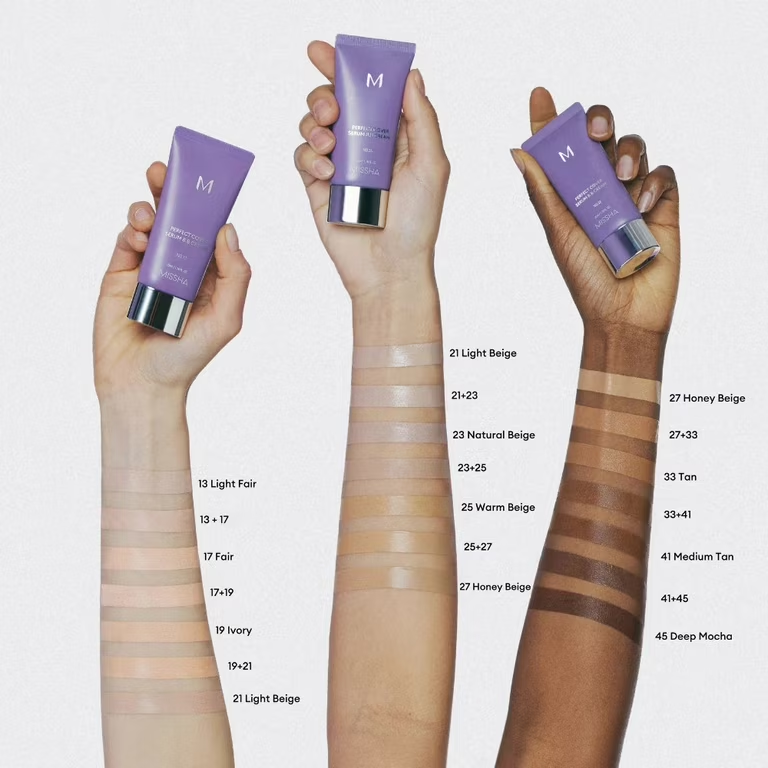
Which brings up the thing sitting in the middle of Able C&C's announcement that nobody will quote. The M Perfect Cover Serum BB Cream is sold in ten shades, and the company says plainly why: to accommodate the range of skin tones of US consumers.
Ten shades is not a marketing decision. It is a manufacturing and inventory decision, and an expensive one. Every shade is a separate SKU with its own minimum order quantity, its own fill run, its own regulatory filing line, its own warehouse slot, and its own forecast that will be wrong. The shades at the ends of the range turn slowest and write off most.
A Korean planning team modelling a US launch on domestic instinct will propose three or four, point at the margin on the tails, and be entirely right about year one. They are not being lazy. They are optimising the thing in front of them. The cost of that optimisation only shows up later, and it shows up as an absence — nothing happens when the moment arrives.
What does a shade range have to do with virality?
A shade range is a call option on distribution you have not bought yet.
Ten million views convert if the viewer can buy their own colour. If they cannot, the same ten million views produce a comment section of people explaining that the brand does not make anything for them, which is worse than no video at all: you have spent the attention and confirmed the objection in public.
Missha did not buy that option in August 2026. It bought it when it committed capital to a ten-shade US range, in a meeting where Cardi B was not a variable because she did not yet exist as one. That looked like an unrecoverable cost right up to the day it became the reason the company had a story.
What should a Korean brand take from this before entering the US?
The generalisable claim is uncomfortable for how brand strategy usually gets discussed. Narrative does not sit on top of the product. In a market you are not from, the product range is the narrative, because the range is the only place a brand states who it thinks the customer is — and it states it before anyone asks. Ship four shades into the United States and you have made a claim about American skin. You made it in a spreadsheet, quietly, and the market reads it back to you later at volume.
"We will continue to expand our points of contact with global consumers based on our product competitiveness," said Cho Ye-seo, head of the brand strategy division at Able C&C. Boilerplate, but note which half is load-bearing. Points of contact are cheap and repeatable. Product competitiveness is neither, and it has to be there first.
The practical version for anyone writing an export plan this quarter: your virality budget is not your ad budget. It is whatever you spent making the product answer a stranger who has never heard of you. Spend it early, while it still looks like waste.


Comments