


Clicks Didn't Just Buy 12 Arc Stores. It Bought a Multi-Million Dollar Blind Spot.
Global prestige and indie beauty categories scaled into new territories faster than ever in 2025—led by a Korean cosmetics wave that reached 202 countries, with the ten largest markets absorbing 70.7% of an $11.4 billion total. Yet no African market appears in those published customs breakdowns. On 28 September 2026 Clicks Group agreed to pay R507 million, about $30.7 million, for control of ARC, a 12-store South African chain whose own K-Beauty page carries seventeen brands and whose newest arrivals are Korean. The shelf that Korea's export table does not name is the one a retail group just bought.
What did Clicks Group actually buy?
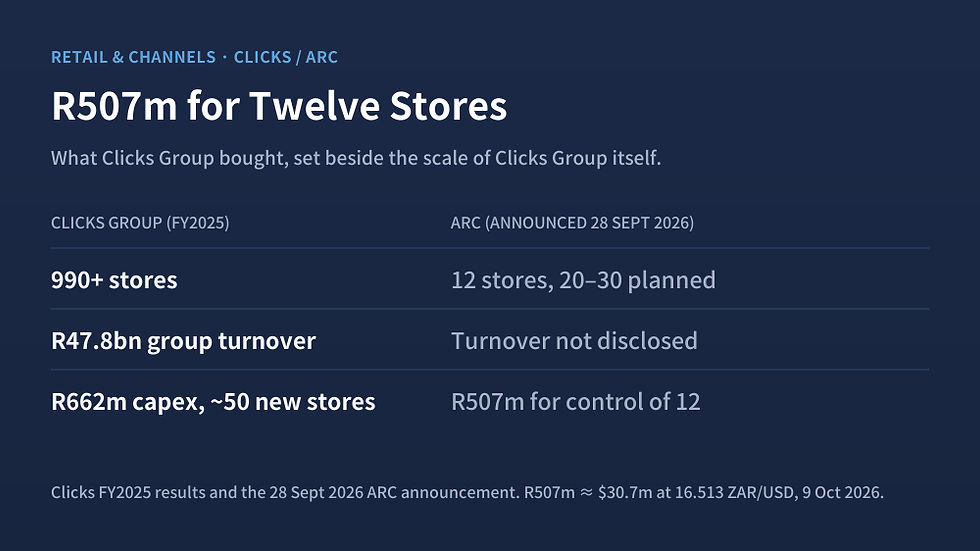
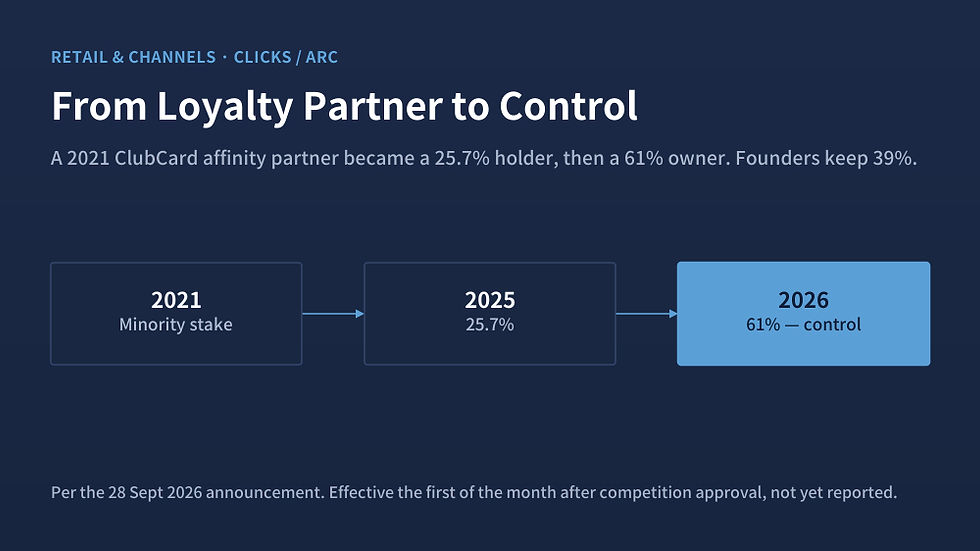
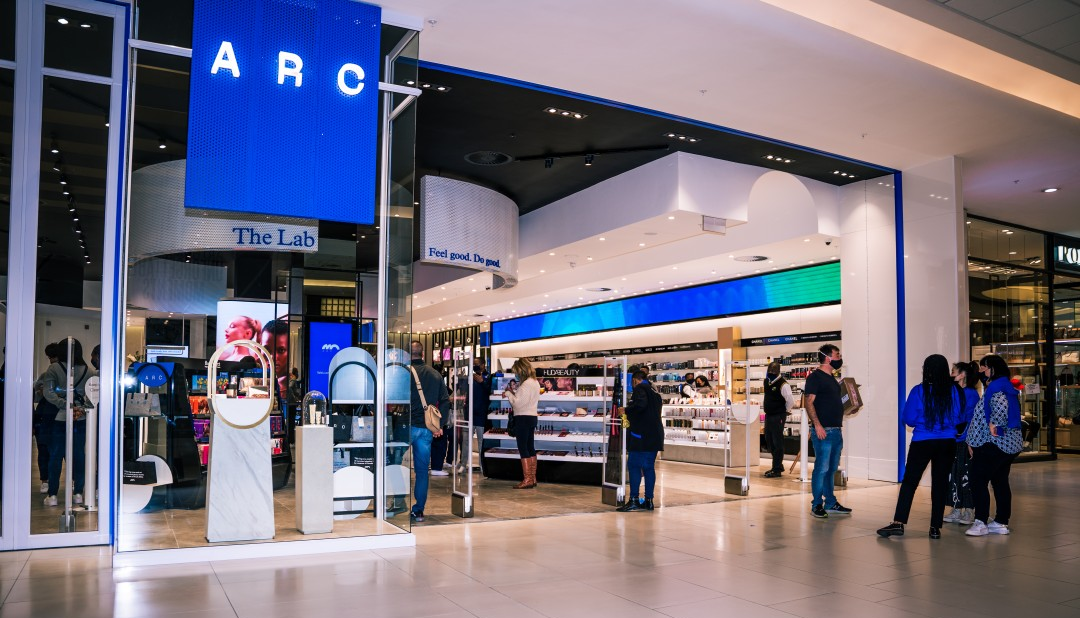
The announcement commits Clicks Group to acquiring a further 35.3% of ARC from the retailer's founding shareholders for R507 million, lifting its holding from 25.7% to 61%. The founders retain 39%, and ARC's executive management has committed to stay until at least 2028. ARC launched in 2020 and trades from 12 stores in major shopping centres, including Sandton City and Menlyn Park, alongside an online business. The stated plan is 20 to 30 stores over the medium term, with Clicks funding the expansion.
One detail in the announcement is easy to pass over. Clicks states that the transaction is uncategorised under the JSE Listings Requirements and that the announcement is voluntary. A deal that hands a listed retailer control of South Africa's leading premium beauty specialist was small enough, measured against Clicks, that nobody had to be told.
Rand figures in this article are converted at 16.513 rand to the dollar, the rate of 9 October 2026.
Why does a twelve-store chain cost as much as a year of new stores?
Clicks Group reported FY2025 turnover of R47.8 billion (about $2.90 billion), of which retail turnover was R37.6 billion. Beauty and personal care accounted for R12.2 billion, up 7.3%, and front shop health for R9.6 billion, up 7.5%. The group operated over 990 Clicks stores and a pharmacy network of 780, within a group total of 1,060 stores that also includes The Body Shop and Sorbet. The medium-term target is 1,200 stores. For FY2026 the group allocated R662 million in capital expenditure for up to 50 new stores and pharmacies and up to 90 refurbishments.
Set R507 million against R662 million. Three-quarters of a year's entire new-store budget buys control of twelve doors. Clicks is not buying floor space, which it can build. It is buying a price tier it does not operate in. Premium beauty — the band above mass, sold with assisted service and with brands controlling which doors they appear in — is a market Clicks puts at more than R6 billion a year (about $363 million), and that figure is the company's own.
Prestige brands decide their own distribution. A mass retailer cannot simply list them. Buying the retailer that already carries them is the faster route, and the price reflects that rather than the twelve leases.
What is actually on ARC's shelves?
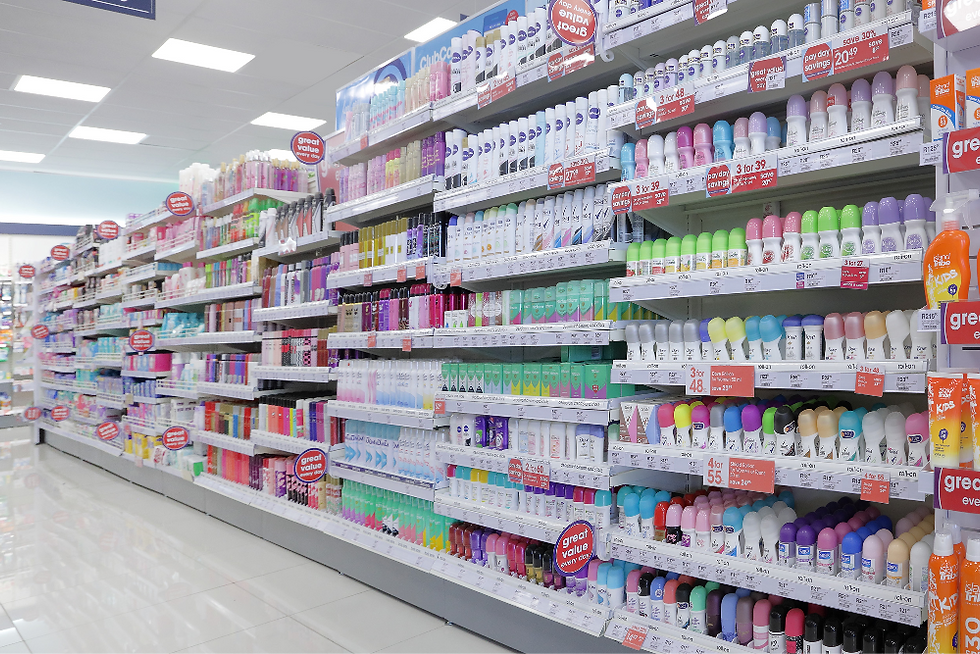
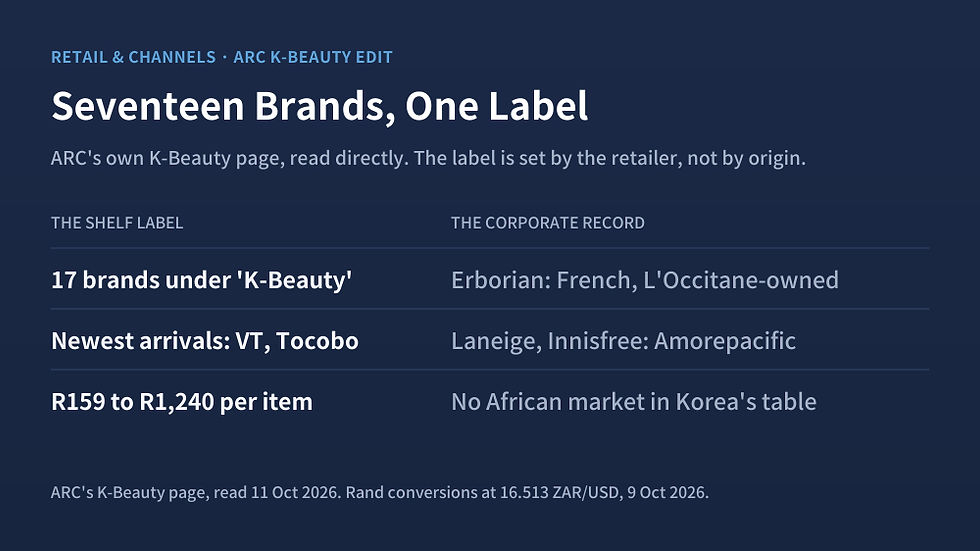
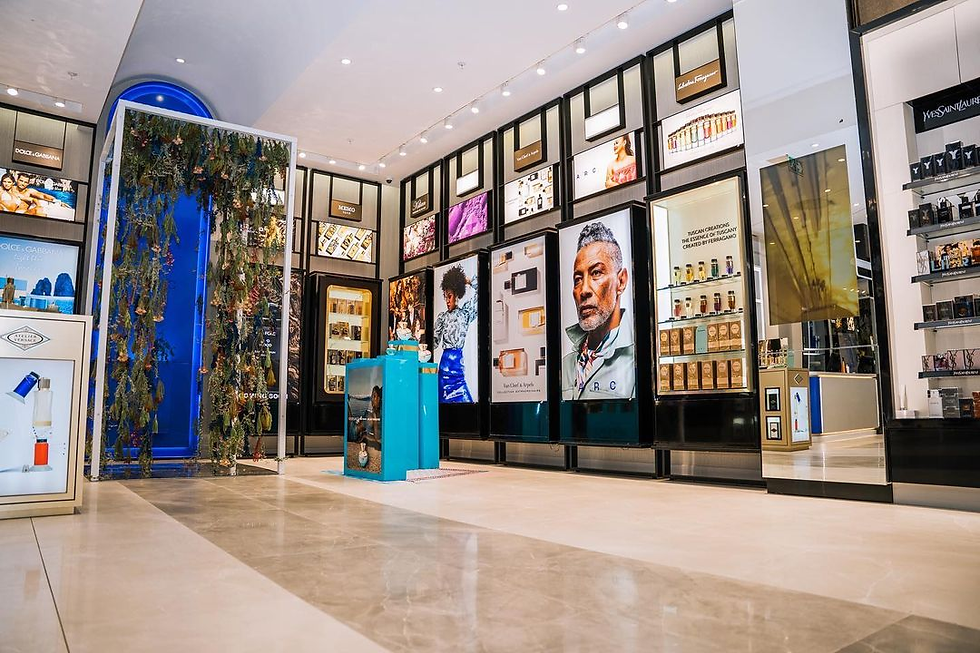
ARC's K-Beauty page, read directly, carries seventeen brands: Mixsoon, COSRX, Beauty of Joseon, Biodance, Barulab, Haruharu Wonder, Axis-Y, SKIN1004, Laneige, Medicube, Erborian, Innisfree, Purito Seoul, TIRTIR, Anua, Tocobo and VT Cosmetics. Listed prices run from R159 (about $10) to R1,240 (about $75), with most items between R359 and R699, or roughly $22 to $42. Two of those names, VT Cosmetics and Tocobo, also appear in the site's newest-arrivals brand list, which places Korean brands among the most recent additions rather than the legacy range.
The page presents the range as a second wave of K-beauty and emphasises fermented ingredients, gentle exfoliants and barrier formulations. That is retailer copy, not a product claim, but it is informative about positioning: ARC merchandises these brands as current prestige, not as a discount curiosity, and the price band supports that.
The label itself is worth examining. Erborian sits inside ARC's K-Beauty edit and is a French-Korean brand that L'Occitane acquired in 2012. Laneige and Innisfree are Amorepacific brands. The shelf is organised by a retailer's idea of a category, not by corporate nationality, which means the shelf and the export statistic are counting different things from the start. More broadly, K-beauty functions here as the vanguard of modern prestige curation—an agile, digitally native wave rewriting how traditional retail tiers fill their floors.
Is 'Africa's biggest beauty store' a fact or a description?
The phrase travels with the deal. ARC's Sandton City outlet is described as the largest standalone beauty store on the African continent, and that description originates with the parties and is repeated across the reporting. There is no independent register of African beauty retail floorspace against which it can be tested, so it belongs in the article as a description the companies chose rather than as a measured fact.
What is testable sits alongside it and is more useful: twelve stores, named shopping centres, a 20-to-30-store target, R507 million for 35.3% of the equity, and a controlling position that does not yet exist in law.
What does Clicks get that it cannot build?
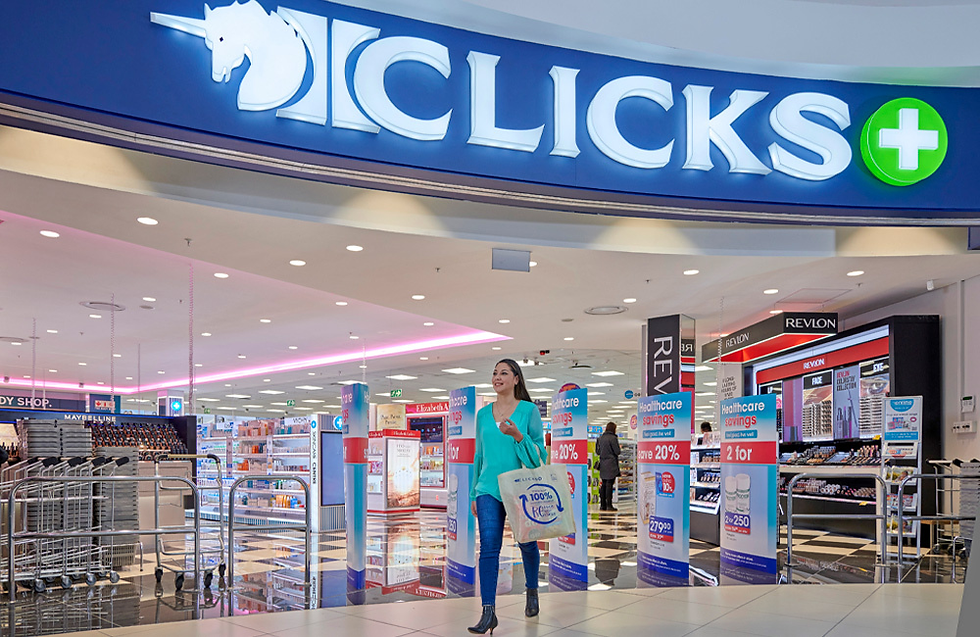
The commercial plumbing between the two businesses predates the equity. ARC has been an affinity partner of the Clicks ClubCard loyalty programme since 2021, and Clicks stores already serve as collection points for ARC orders. The announcement reports that spending at Clicks by registered ARC customers rose 16% over the past year to R836 million, about $50.6 million.
That number repays attention. It measures what ARC's customers spend inside Clicks. It is not ARC's turnover, which has not been disclosed, and the announcement does not claim it is. Clicks is describing the value of a customer base to its own tills, which is a coherent reason to buy control and a different thing from buying a profitable retailer.
What changes for a Korean brand on that shelf?
Before approval, ARC is an independent specialist with twelve doors setting its own range. After it, range decisions sit inside a group with over 990 stores, a 1,200-store target and a national loyalty database. The announced expansion takes the premium format from twelve doors to between twenty and thirty, which roughly doubles or triples the shelf a listed brand is competing for.
The counterweight is that the buyer now reports into a group running a R12.2 billion mass beauty business. Range overlap between the two formats becomes a group question rather than a negotiation with a specialist buyer. The founders' retained 39% and the management commitment through 2028 are the structures both sides put in place to hold the curation steady, and both have dates attached to them.
Why is the deal not finished?
The transaction is conditional on competition authority approval, and Clicks states that it will take effect on the first day of the month following that approval. No approval has been reported. Until it comes, Clicks holds 25.7% and ARC's buying decisions remain its own.
Any brand building a South African plan around a twenty-to-thirty-store rollout is building it against a conditional event with no published timetable. The shelf expansion is funded, announced and not yet permitted.
Where does this leave the three sides of the trade?
For manufacturers and ODM operators — the contract developers and manufacturers who produce finished goods for brand owners — demand that never appears in a national export table still consumes capacity. Order books show where volume is going earlier than customs summaries do, and the gap between the two is where unserved markets sit.
For brand owners and buyers, the question in South Africa has changed shape. It is no longer which specialist retailer to court, but which group owns the specialist and what else that group sells. Door counts move with ownership, and so do the terms attached to them.
For regulators and investors, a R507 million transaction that nobody was required to announce has changed who controls South Africa's leading premium beauty specialist. Materiality thresholds measure the acquirer. They do not measure the shelf.
The shelf was built before anyone counted it. The counting comes afterwards.


Comments