


From a Near-Fatal Accident to Decoding TikTok Commerce: The Story of Jun-ho Oh
Updated: Aug 16

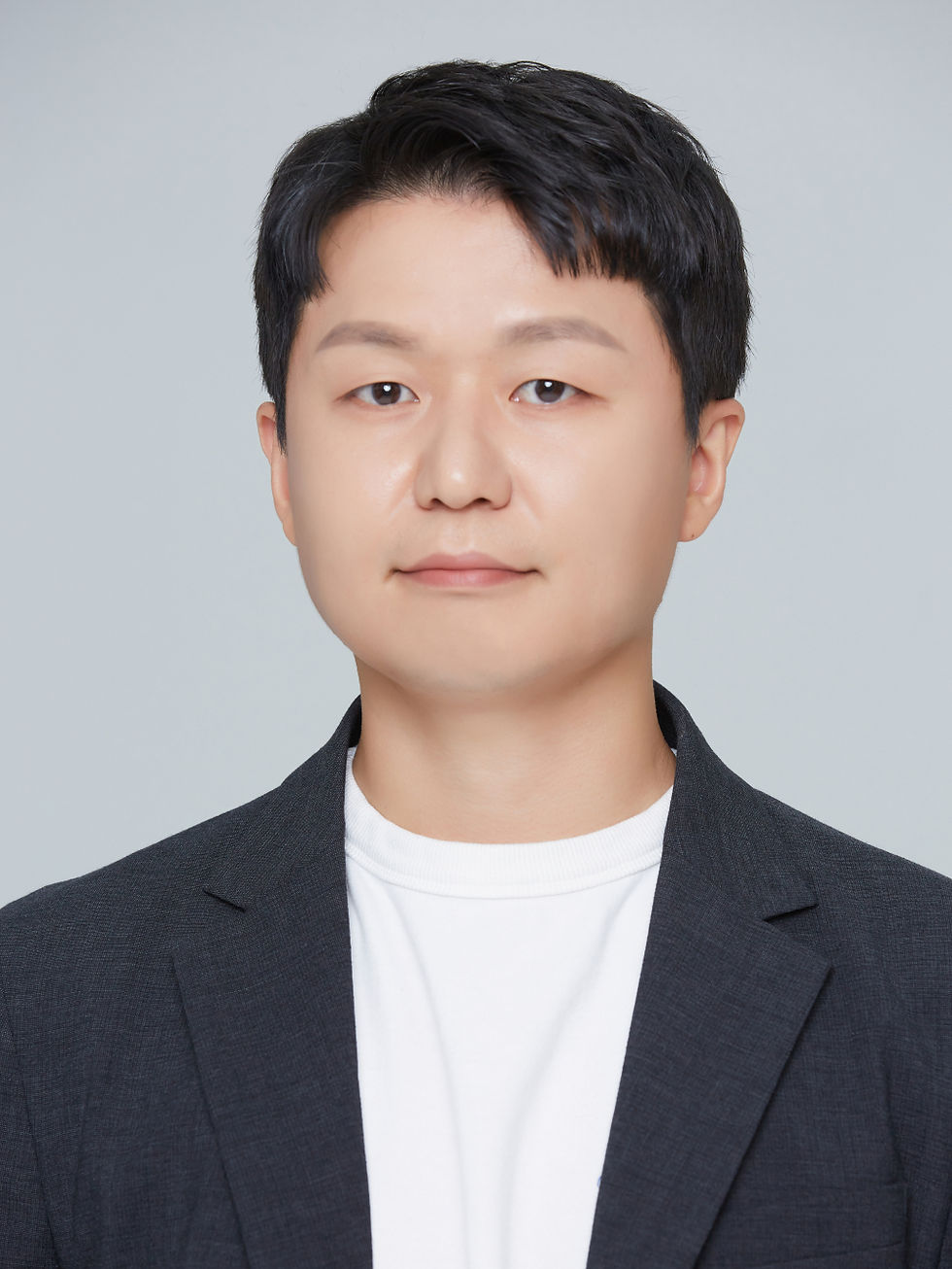
A single red light stood between life and death for one young man. When Jun-ho Oh, CEO of Mayacrew, decided to launch his company, it wasn’t in a sleek, modern conference room—it was on a hospital bed.
While serving in the Conscripted Police (Korea's conscript-staffed auxiliary police force), he survived a devastating traffic accident that hurled him onto an eight-lane highway. The 30 million KRW (~$22,000 USD) he received in insurance compensation—literally the price of his second chance at life—became the foundational launching pad for Mayacrew.
His journey ranges from the raw hustle of visiting up to 400 restaurants a day only to have doors slammed in his face, to spending over $20,000 a month on server costs to crack the U.S. TikTok ecosystem—ultimately earning an organic product endorsement from pop star Cardi B. Yet behind these remarkable data-driven achievements lies the profound trauma of a leader who had to tearfully draw a line through the names of dedicated employees just to keep the business alive.
When I first met him last year through a mutual acquaintance, none of this intense grit was immediately apparent. He came across simply as a bright, personable young founder. Even when discussing major milestones, his response was always grounded in humility: "I was just lucky, and I owe it all to the people around me." As our conversation unfolded, that modesty confirmed a rare depth of character. It became clear why anyone who comes to know him naturally ends up rooting for his success.
Having built a venture from the brink of tragedy, CEO Jun-ho Oh now sets his sights on building a world-class, defining enterprise. Here is his story of survival, resilience, and the true essence of business.
Q1. I heard you used the insurance payout from a major traffic accident during your military service as your initial seed capital. How did that near-fatal moment shape your decision to start a business?
I was serving in the Conscripted Police at the time. I was out on leave, riding on the back of a senior officer's motorcycle on our way to Paldang Dam for some fresh air, when a car making an illegal U-turn hit us head-on. The impact launched me completely into the oncoming lanes.
It was a massive road—eight lanes wide—and by sheer luck, the traffic light for the oncoming direction was red, so all the cars were stopped. If that light had been green, I would have died instantly. My hip joint was shattered, leaving me completely bedridden and unable to even raise my hips off the bed for two full months.
Lying in that hospital bed, my mind ran wild, and my entire life flashed before my eyes. Looking back, I realized I had nearly drowned twice as a child, and this was already my third or fourth major car accident. Every single time, I had miraculously survived by a hair's breadth.
Suddenly, I remembered the arcade machines outside stationery stores from my childhood. Even when your character dies, if you insert a 100-won coin, it makes a chime and gives you a fresh life. I thought to myself: "I clearly died in this game called 'my life,' but did God secretly insert a coin on my behalf to bring me back?"

That thought sent chills down my spine, and a profound fear took over. "What if this was the final coin God gives me?" I imagined a scenario where I lived a completely ordinary life—working a corporate job, getting married, living until 80 or 90—and upon dying, time-looped back to my 20s in that very hospital room. How would I want to live the rest of my time?
The conclusion was crystal clear. Climbing the corporate ladder, chasing prestigious university degrees, and playing it safe no longer mattered to me. Since this was a borrowed life anyway, I developed an unshakeable boldness: even if I hit rock bottom and failed completely, it wasn't like I would starve to death in Korea.
I resolved to walk the path of an entrepreneur—someone who could fully pursue what they love and prove their own purpose for existing. That 30 million KRW payout, the literal price of my survival, became the bold starting point for Mayacrew.
Q2. When you decided to drop out of university, how did your family and those around you react?
To be honest, until I finally made the call during my sophomore year, I was consumed by intense anxiety and internal conflict. For someone in their early 20s, stepping off the path that everyone else considers "the right answer" isn't as easy or fearless as it sounds. My friends and society at large viewed a college degree as a guaranteed insurance policy for a stable future.
When they saw me throwing away that safe haven to leap into the unknown, almost everyone tried to stop me. They asked, "Why are you taking such a reckless risk?" or "What if you regret this later?" I was met with harsh skepticism, and honestly, there were moments I felt deeply confused, wondering if I was making a terrible mistake.

However, my parents—whom I expected to be my biggest hurdle—had an entirely different reaction. Having watched me closely for years and understanding my true disposition, they deeply respected the conclusion I had reached after such a profound personal crisis.
Rather than opposing my decision, they affirmed who I was, saying, "You are someone who needs to fully pursue what you believe in." Thanks to that warm vote of confidence from my family, I was able to shed my fear of risk and find the courage to step out into the wild.
Q3. I understand you lived closely with other early-stage founders in a community called 'Gwang-in Hoe-kwan' (House of Madmen). How did that shared experience serve as an emotional anchor and strategic turning point in shaping your early entrepreneurial mindset?
It didn't start with any grand master plan. I randomly received a KakaoTalk message asking, "What if a group of founders our age lived under one roof and built a tight-knit brotherhood?"
At the time, as novice entrepreneurs fighting lonely battles on our respective front lines, we desperately needed an emotional safety net where we could lean on one another. That single message led me to join the community, and we ended up living together for five years.
The greatest asset of our household was a culture of total non-judgment. Outside, the world was constantly measuring and evaluating us through cold, analytical lenses. But inside that house, no matter how reckless or crazy an idea I pitched, everyone backed me up 100% with unconditional emotional support. Knowing I had a safe harbor to return to even if I failed was the single biggest anchor that kept my mental toughness intact along a very lonely path.

The real shift in my business philosophy came from watching Jin-woo Kim, CEO of LINER, up close every day. Seeing how intensely he poured himself into his business taught me what real hustle looks like. More importantly, for four or five years, he persistently confronted me with one question: "Jun-ho, your dreams are too small. You need to think much bigger."
That challenged me to completely discard my 'small business owner' mindset, which until then had been content with modest local revenue. It served as a defining milestone that inspired me to set my sights on the massive U.S. market and dream of capturing the global marketing ecosystem.
Q4. You launched your startup after noticing that the steep discounts offered by first-generation social commerce platforms rarely translated into repeat customers. How did your initial business model prevent one-off marketing losses for small business owners and still build a sustainable growth loop?
When I was fleshing out my first venture, the main thing I zeroed in on was the fatal flaw of those first-generation social commerce platforms. Back then, companies like Coupang and Ticket Monster were handing out 50% discount coupons right and left.
While that strategy seemed great for driving an initial influx of foot traffic, a closer look revealed a critical issue: repeat visit rates were under 5%. Customers would simply exploit the heavy discount and never return, making it a bottomless pit for business owners. They were bleeding money with zero long-term retention—it was completely unsustainable.
To solve this, I flipped the script entirely. Instead of focusing on "How do we get this specific customer to return?", I asked, "How do we use this customer's review to bring in the next new customer?"

I designed a virtuous cycle where even if a single customer didn’t return immediately, their online review would continuously attract other new diners. To make that work, we couldn't just hand out coupons indiscriminately. Instead, we created a targeted system that exclusively offered perks to creators with verified online influence.
We developed a refined mechanism where the size of the discount was tied directly to the influencer's actual reach. Rather than business owners unilaterally absorbing marketing losses, we established a mutually beneficial model: "If you extend this hospitality, the influencer will repay you with tangible promotional reach and new customers."
This structure prevented senseless marketing losses for business owners while building a sustainable, win-win ecosystem for both the venues and our platform.
Q5. In the early days of Supermembers, you were visiting as many as 400 restaurants a day, facing constant rejection. What did you learn from that seemingly reckless, cold-calling grind?
At the time, our team consisted of just three people: myself, our Chief Operating Officer, and a developer. We needed to build the app, but our developer estimated it would take at least three months. Running on a tight budget with time working against us, we couldn't afford to sit idle for a quarter. I realized that if we wanted venues ready to use the platform the moment it launched, we had to onboard business owners in advance.
So, without a finished product or an operational marketing service, we printed flyers and hit the streets. The COO and I would arrive at a commercial district and split up: "You take the right side, I’ll take the left, and let’s meet at the end of the alley." Between the two of us, we did raw street-level sales—pounding the pavement, walking into restaurants, and working every building from top to bottom.

Over those three months, we walked into roughly 20,000 restaurants. If the owner was there, we pitched them directly; if not, we asked the staff to pass along our material, offering a free one-month trial upon sign-up once we launched.
Out of 20,000 visits, we managed to sign up just 20 venues—a dismal conversion rate of 0.1%. Looking purely at the metrics, anyone would say the idea was dead on arrival. But for me, those 20 sign-ups gave me the absolute confidence that we had enough to launch. More importantly, that grind gave us a masterclass in the real, ground-level pain points of small business owners.
For these proprietors, marketing options were extremely limited, making blog marketing virtually their only viable channel. However, because the space was rife with predatory, fly-by-night agencies that would scam owners, shut down, and reopen under a new name, deep-seated distrust was everywhere. The moment the phrase "blog marketing" left my mouth, owners would routinely tell me to get out. Facing that deep skepticism was undeniably tough at first.
So, we adapted our strategy. Instead of pitching a service, we opened with: "We're university students building a marketing tool for local businesses." Surprisingly, owners lowered their guard and listened. We’d say, "We're students building this platform to help local spots. If you sign up early, we’ll give you a free month—could we get two minutes of your time?" That subtle shift opened doors.
Those first 20 venues—scraped together by three founders with nothing to their names—became our launchpad. By validating real market demand on foot before writing a single line of production code, we laid the foundation for a platform that now serves over 3,000 merchant locations.
Q6. While many startups pour their energy into fundraising, Mayacrew chose to survive on organic revenue without taking outside investment. What drove that strategic decision?
A lot of people assume I turned down investment out of some grand strategic foresight or pure stubbornness, but that couldn't be further from the truth. In the early days, like any other startup, we were desperate for venture capital and actively pitched VCs. However, from their perspective, the blog marketing market was already an oversaturated red ocean. It wasn't that we chose not to take venture capital—the market simply wasn't giving it to us.
Yet, what started as a forced path turned out to be a massive blessing in disguise. By avoiding external capital, we gained absolute operational autonomy: the freedom to make swift, decisive calls without needing anyone else's permission. Had we diluted our equity for VC money, we would have exhausted immense energy convincing shareholders every time we wanted to pivot or iterate.
Instead, when I decided to shift our focus to capturing the U.S. marketing space—or when we had to dismantle a growing service overnight to pivot—I was able to execute those calls instantly based on my own conviction. Watching investor-backed commerce companies struggle under intense exit pressure whenever market conditions turned made me realize that preserving Mayacrew's relentless agility was an incredible advantage.
Of course, bootstrapping came with painful, concrete opportunity costs.
If we had been well-funded, we could have poured millions into aggressive scaling the second our data validated a clear market opportunity, taking over the market in one fell swoop. Instead, bound by our cash balance, our growth timeline was naturally delayed. The real reckoning came toward the tail end of the COVID-19 pandemic, when our financial reserves were completely exhausted, pushing us to the absolute edge.
Ultimately, while those trade-offs were grueling, enduring that crucible forced us to build self-sustainability and survival instincts directly into our DNA.
If we had been a flashy startup dependent on external capital injections, we would have gone under long ago. But the operational resilience forged through this independent route is precisely why we are consistently profitable today, with annual profits reaching between $1.5M and $4M+ USD while growing on our own terms and pursuing much bigger ambitions.
Q7. When the small business sector was collapsing during COVID-19, you faced an extreme crisis. As CEO, how did you navigate that moment when you were at your most vulnerable?
The real crisis didn't hit us during the height of COVID-19, but rather in early 2023 as the pandemic was winding down. At the time, our B2B marketing service, 'Superchart,' was showing strong growth trajectories. Blinded by the belief that we had to capitalize on three years of pent-up post-pandemic demand, I hired far too aggressively, completely missing the fact that Q1 is the ultimate off-peak season for corporate B2B marketing as large enterprises are only just setting their annual budgets.
As 2023 kicked off, revenue plummeted off a cliff, leaving us $40,000 short for that month's payroll. Both the company's reserves and my own mental stamina were so depleted that a light breeze could have knocked us over.
Oddly enough, what kept me from giving up was an Elon Musk motivation video I replayed endlessly on YouTube.
The story of Musk facing the simultaneous collapse of Tesla and SpaceX—split-funding his remaining fortune across Tesla and SpaceX to keep both "children" alive—struck a deep chord. I asked myself: "As a parent to Mayacrew, am I putting my life on the line to keep my child alive?" The honest answer was no.
That moment of clarity triggered a fierce response. To cut out all mental noise, I locked myself into an uncompromising daily routine. I listened to only one song—'Our Dream' from the anime One Piece—and kept that single 10-minute Elon Musk video on an infinite loop. Every morning, I wrote down five non-negotiable tasks and focused single-mindedly on crossing them off, taking the crisis one day at a time.
Driven by a parent's desperation to save a child, I pursued every possible credit line. When my mother learned about the company's situation, she offered her personal savings, saying, "If the company is struggling, take this to keep it afloat." It was the exact amount needed to cover that month's payroll gap.
However, family help was only a temporary bandage. Without restructuring our core operations, we were pouring water into a leaking bucket. To survive, we had to cut our workforce by a third to reach immediate breakeven.
It remains the most painful and humbling memory of my life, but I had to write out the names of all 20 employees in order of operational priority and draw a cold line across the list. I called each affected team member in one by one, laid bare the company’s bank balance, and was completely transparent: "This is our reality. I can guarantee your full severance pay if we act this month, but beyond this point, survival is impossible. I am deeply sorry."
Drawing that line through tears and confronting that harsh reality was devastating, but from May 2023 onward, Mayacrew has not posted a single unprofitable month. While it was a traumatic ordeal caused by my own miscalculation as a leader, it was an invaluable lesson in the true weight of leadership and the responsibility of treating a company as your own flesh and blood.
Q8. Out of countless consumer goods, why were you so convinced that 'K-Beauty' could trigger the most explosive data leverage in the U.S. TikTok ecosystem?
I had a conviction that for Mayacrew to become a truly great enterprise in the long run, going global was non-negotiable. Looking at the top 100 global companies by market cap as of late 2023, South Korea had only one—Samsung.
France, by contrast, had five, four of which were beauty and fashion powerhouses like L'Oréal and LVMH. To compete against global elite players in the U.S. market, I knew we had to leverage our own cultural strengths: consumer goods where we held a distinct advantage.
When we conducted deep market research on the U.S. landscape in late 2023, the data pointed unequivocally to one category breaking out at astronomical scale: K-Beauty.
While early pioneers like 'Beauty of Joseon' originally opened the doors to the U.S. market, newer players like Anua and Medicube were suddenly generating hundreds of thousands of unit sales on TikTok Shop off a single mega-hit SKU, expanding the market footprint exponentially.
Digging deeper into the underlying data, we identified the primary engine behind this trend: TikTok marketing and the rise of "discovery-driven commerce," where content directly triggers instant conversion. U.S. consumers were buying products with their own money, voluntarily uploading video reviews, and generating massive organic viral loops.
Cosmetics are the ultimate visual consumer good for short-form video—they offer instant, high-contrast before-and-after transformations and unique texture reveals. The natural synergy between product characteristics and platform mechanics was incredible.

K-Beauty was riding the wave of TikTok to generate explosive data leverage that no other consumer category could match. Seeing these clear metrics, I realized this wasn't just a trend, but a fundamental paradigm shift in modern marketing.
Influencer marketing and data analytics had been Mayacrew’s core competencies for over a decade. With a massive market opening up right in front of us, there was zero reason to hesitate.
Q9. As a communications major, you’re known as a total "data obsessive"—to the point of being the best SQL analyst at the company and pouring an eye-watering sum into web crawling servers every month. What drives this obsession with data from a non-technical founder?
It's true—I come from a humanities background in media and communications. I dropped out during my sophomore year to start my business, so I didn't learn much formally at university. But operating Mayacrew over the past decade, I realized that the ultimate core of our business comes down to one question: "How do you quantitatively evaluate an influencer's true impact through numbers and algorithms?"
Because I spent sleepless nights manually writing and refining those early algorithms myself, I naturally developed a deep fluency in data. Today, I am still the most proficient SQL user in our company.
When helping K-Beauty brands expand into the U.S. market, I refused to rely on gut feelings or industry gossip. Instead, we began scraping the entire U.S. TikTok ecosystem for K-Beauty data. Spending over $20,000 a month purely on crawling servers led many people to call me crazy.
However, after six months of persistently aggregating and restructuring that data, the actual structural skeleton of the market emerged—something invisible to the naked eye.
We conducted a complete sweep of hashtag volume indicators for K-Beauty brands that achieved massive success in the U.S., such as Anua, Beauty of Joseon, and COSRX. The numbers pinpointed the exact inflection point where marketing transitioned from unpaid product seeding to hyper-scaled affiliate marketing commission models. We captured the precise timing of the success formula through data.
Armed with these metrics, our client meetings changed completely. We no longer pitch vague concepts like "TikTok is huge in America right now."
Instead, we provide precise, data-driven diagnoses: "This is your current ratio of U.S. versus Southeast Asian content volume. The affiliate conversion spike occurs right here, which means you need to execute this specific campaign immediately." When clients see concrete numbers laid out in front of them, trust is established instantly. Numbers don't lie.
Q10. Through this relentless data analysis, what unique operating mechanics and "winner-take-all" secrets did you discover about the TikTok Shop ecosystem?
After spending over $20,000 a month in server fees to crawl and analyze six months of U.S. TikTok K-Beauty data, we uncovered a fascinating rule. The key to the TikTok Shop ecosystem isn't simply churning out affiliate videos en masse.
When you look closely at the data across various brands, an extreme winner-take-all structure emerges: out of 10,000 videos distributed, only about 300 actually generate meaningful revenue. Even more striking, if a brand hits $1 million in monthly sales, $700,000 to $800,000 of that total is driven by just the top 10 breakout videos.
While typical brands rely on gut instinct and think, "Everyone else is pushing 10,000 videos, so we should too," we looked at the data and redefined the game entirely. We stopped chasing raw volume and reframed our strategy around two core questions: "How do we craft those top 10 high-converting videos with precision?" and "How do we recruit the specific creators capable of making them?"
Due to TikTok’s algorithmic design, once a User-Generated Content (UGC) framework goes viral, replicating that winning formula with subtle tweaks in setting or staging is what keeps the momentum going. We developed a boosting model: the moment a seeded video breaks out, we immediately request Spark Ads codes (TikTok’s native ad-boosting feature) and back it with performance ad spend, driving down Customer Acquisition Cost (CAC) while scaling exponentially.
This data-backed approach produced astonishing real-world results. When we took over agency management for an Olive Young private label brand, we hit $800,000 in monthly sales in just three months.
For our next brand, 'Laka,' we generated $250,000 in monthly revenue within just six weeks of launching. Specifically with Laka, as seeded content began going live, we caught an early data signal when one of the first ten affiliate videos crossed $1,500 in single-day sales. Track records like this are exceptionally rare in the current agency landscape.
Mayacrew has spent the last decade building proprietary algorithms to quantify influencer impact. Because our team understands data at a foundational level, dissecting the true mechanics of an ecosystem through numbers allowed us to prove that our execution holds a distinct competitive edge on the global stage.
Q11. To prove the power of your platform, you launched an in-house brand selling "spicy seaweed" and even scored organic exposure through Cardi B. How did you pull that off?
Late one night, my phone blew up with frantic calls and messages from friends: "You won't believe this—Cardi B just posted a video buying, eating, and reviewing your spicy seaweed!"
At first, I couldn't process it. My heart was pounding all night, and as soon as morning hit, I rushed to the office and pulled up our TikTok Shop admin console.

Tracing the transaction history item by item confirmed the reality: no one paid for sponsored placement. Cardi B had purchased our product with her own money and voluntarily posted a review on her personal TikTok account.
Truthfully, we created that seaweed brand because we wanted to prove our capabilities with verifiable revenue metrics rather than empty sales pitches. More than that, we desperately needed a private testing lab to validate our data hypotheses. You can't responsibly experiment with client ad spend when testing critical variables—like determining the exact threshold to scale ad budgets on affiliate content or identifying which visual assets trigger the recommendation algorithm.
So, we launched our own brand, rigorously tested granular data hypotheses, and executed targeted TikTok seeding. Less than a month after launch, that movie-like breakthrough happened.
It was a defining moment that proved a core truth: whether in beauty or food, if you strike the core mechanics of TikTok's algorithm to trigger organic content creation, you can open the wallets of world-class superstars and unlock massive data leverage.
Q12. Many beauty brands are jumping at the chance to launch on U.S. TikTok Shop right now. Yet you strongly advise against it, saying, "If you don't have deep capital reserves, don't even look at TikTok Shop." What is the cold reality behind that warning?
Because of our track record and the publicity around the Cardi B viral moment, we get inundated with inquiries from brands wanting Mayacrew to manage their TikTok Shop operations. But I'm blunt and direct with them: if a brand lacks financial stamina, they shouldn't even consider TikTok Shop.
At its core, TikTok Shop is a game of pure capital deployment. As I mentioned, an extreme minority of top-tier creators drive the overwhelming majority of total sales volume. However, the top 10% of creators who actually convert are already locked down by mega-beauty brands backing them with massive capital.

Category leaders like 'Tarte' retain creators by offering astronomical incentives and lavish reward structures. To pull those creators toward a new brand, you have to absorb negative initial Return on Ad Spend (ROAS) and burn hundreds of thousands of dollars a month in ad spend to earn algorithmic favor. TikTok's AI algorithm naturally amplifies advertisers who spend aggressively and generate high engagement.
The initial technical barrier to entry is equally steep. Building immediate trust on a fresh TikTok Shop requires established review volume. Sophisticated brands navigate this by using third-party integrations like 'Judge.me' to compliantly sync existing review assets from Amazon or their Direct-to-Consumer (D2C) storefronts. That technical foundation must be built before stepping onto the field.
The most dangerous hidden bottleneck, however, is inventory. If a video hits the algorithm and goes viral, sales don't just double or triple—they explode tenfold or more overnight.
If you don't have buffer inventory sitting in local U.S. warehouses to fulfill that surge immediately, what happens? TikTok’s algorithm penalizes your account and cuts off traffic distribution. The moment a brand says, "It's going viral! Let's fire up the factory in Korea and ship a container by sea," you lose two months minimum. By the time inventory arrives, reach has cratered to zero and the window has closed.
Sustaining hyper-growth requires working capital capable of funding rapid inventory turns. If a brand lacks at least $700,000 to $1 million in deployable capital and a flawless inventory supply chain, running targeted guerrilla campaigns on Amazon Ads is a far smarter, safer strategy for survival.
Q13. You compare yourself to Luffy from the anime One Piece, emphasizing flat leadership by saying, "When I don't know the way forward, I figure it out together with my team." Yet there are moments that demand a leader's lonely, autocratic decision. How do you reconcile the dilemma between being a "captain who collaborates" and the "isolated decision-maker accountable for direction"?
When you stand on the edge of a cliff where the company's survival is at stake—like deciding whether to forgo venture funding or execute a corporate restructuring—the final signature falls solely on the CEO. That burden is inherently solitary. However, I navigate the dilemma between being a collaborative captain and an isolated decision-maker by strictly separating the deliberation phase from the execution phase.
When we lack clarity on where the ship should head, I lay bare my vulnerabilities to my team like Luffy: "I honestly don't have the answer to this. Let's put our heads together."
I don't believe a CEO is obligated to have every answer. During our 2023 crisis, when we had to lay out our depleted balance sheet and draw that painful line of restructuring, we didn't hide behind corporate speak. Sharing the raw truth built deep mutual trust, ensuring the team felt empowered to help solve the problem rather than feeling betrayed.
However, once we've debated data-driven hypotheses and it's time to set sail—saying, "Alright, we're hoisting the sails in this direction"—I step fully into the role of the resolute decision-maker who shoulders the risk.
When I decided to pour over $20,000 a month into server costs to crack the U.S. TikTok market, I planted our flag with the understanding that if it failed, the liability rested entirely on me. It is my job to protect the ship so the team can execute with conviction.
The engine of my leadership isn't about projecting flawless authority. It comes from being radically horizontal when seeking wisdom, and radically vertical when taking accountability. Because that foundation of trust exists, my team remains steadfast even when I make bold, high-stakes calls—standing alongside me as true partners navigating rough seas together.
Q14. Mayacrew comes across as an organization capable of launching new initiatives and shutting them down at terrifying speed if they miss the mark. How does this decisive leadership style around pivoting operate without unsettling your team?
That speed is a direct reflection of my personal operating philosophy: we kill underperforming initiatives fast. We sunset an unpaid seeding platform—one we'd already built to 14,000 U.S. creators—the moment we saw the market shift toward affiliate models. Similarly, after spending six months preparing an Amazon management business, we scrapped it immediately once we saw AI tools handling bid adjustments so effectively that long-term moats were eroding.
Whenever we pull the plug on a project, there are naturally voices inside advocating to "give it a little more time." But clinging to a stagnant idea drains organizational bandwidth and morale faster than anything else.
I don't make these calls out of 100% certainty; most pivots are probability bets, 60/40 or 70/30. But when I see a 60% probability, I steer the ship without hesitation and own the outcome. More importantly, I share the exact metrics, reasoning, and even my own missteps with absolute transparency so everyone understands why we're pivoting.

I even tell my team point-blank: "I can't guarantee that our main cash cows—Supermembers or TikTok agency services—will exist five years from now. Naver or TikTok themselves could be disrupted by emerging AI platforms."
Hearing that from a CEO could easily create anxiety, but I follow up with a core truth: "Platforms may vanish, but two things remain constant: I will be building businesses until the day I die, and Mayacrew's fundamental problem-solving capability is indestructible."
I value talent that asks, "What does the company need right now, and where can I create maximum impact?" over individuals who define themselves narrowly by traditional job titles.
Our core team has built immense survival instincts across sales, product ownership, and growth marketing. Because our organizational fundamentals are strong, pivoting hard doesn't capsize the ship—it simply allows us to catch bigger waves faster.
Q15. At the end of this long voyage, what is the ultimate "One Piece" that you hope to discover alongside your team at Mayacrew?
I have very little interest in material milestones like buying expensive cars or luxury real estate. I don't own a car or a home right now, yet I live a deeply fulfilling life. The real driving force behind running this company is answering why I exist on this earth and proving the value of my life.
To share a personal perspective, I am a Christian. Within a biblical framework, a meaningful life means taking the talents God entrusted to you and multiplying them to their fullest potential rather than burying them in the ground.
In the scriptures, the servant who buried his talent was reprimanded, while the one who cultivated his talents was rewarded. I refuse to place arbitrary limits on my potential; I want to stretch my capabilities as far as they will go and make a lasting mark on the world.

During my formative years at Gwang-in Hoe-kwan, Jin-woo Kim (CEO of LINER) asked me daily: "Jun-ho, why are your dreams so small?" At the time, I didn't fully grasp what he meant. But over time, it clicked: there is no reason to constrain your ambition with current realities.
Whether you aim to build a publicly traded company in Korea, list on NASDAQ, or break into the global top 100, reaching extraordinary scale is exponentially difficult regardless. If you're going to place a bet, you might as well bet big.
The ultimate destination my team and I are sailing toward is building a defining, world-class enterprise—a global titan out of South Korea alongside companies like Samsung.
To me, a true dream exists at the intersection of two things: something so outrageously ambitious that it requires absolute, obsessive execution to achieve, yet so thrilling that just thinking about it makes your heart race. Proving to the world that we can realize that vision alongside extraordinary colleagues—that is the real treasure Mayacrew is building toward.


Comments