


Unlearning Success: VIVLIV VP Dohyeong Kim on Data & K-Food
To be honest, I don’t know much about this industry yet. Please, teach me everything you can."
About a year ago, a man approached me with this unexpected request for mentorship. Typically, leaders entering a new field tend to assert their authority by leading with their past credentials. He was different. Disregarding external factors like age or rank, he humbled himself completely, focused solely on deciphering the nuances of a new market and learning how to contribute to his organization effectively.
It was only later that I discovered his professional background was far more formidable than I had imagined. For the past decade, he has been a high-level strategist driving growth at the forefront of Korea’s mobility and delivery platforms, including industry giants like Yogiyo and Tada (VCNC). Having expanded platform territories amidst fierce data wars and complex regulatory hurdles, his past successes seemed to him less like medals of honor and more like old habits that needed to be unlearned to make room for new growth.
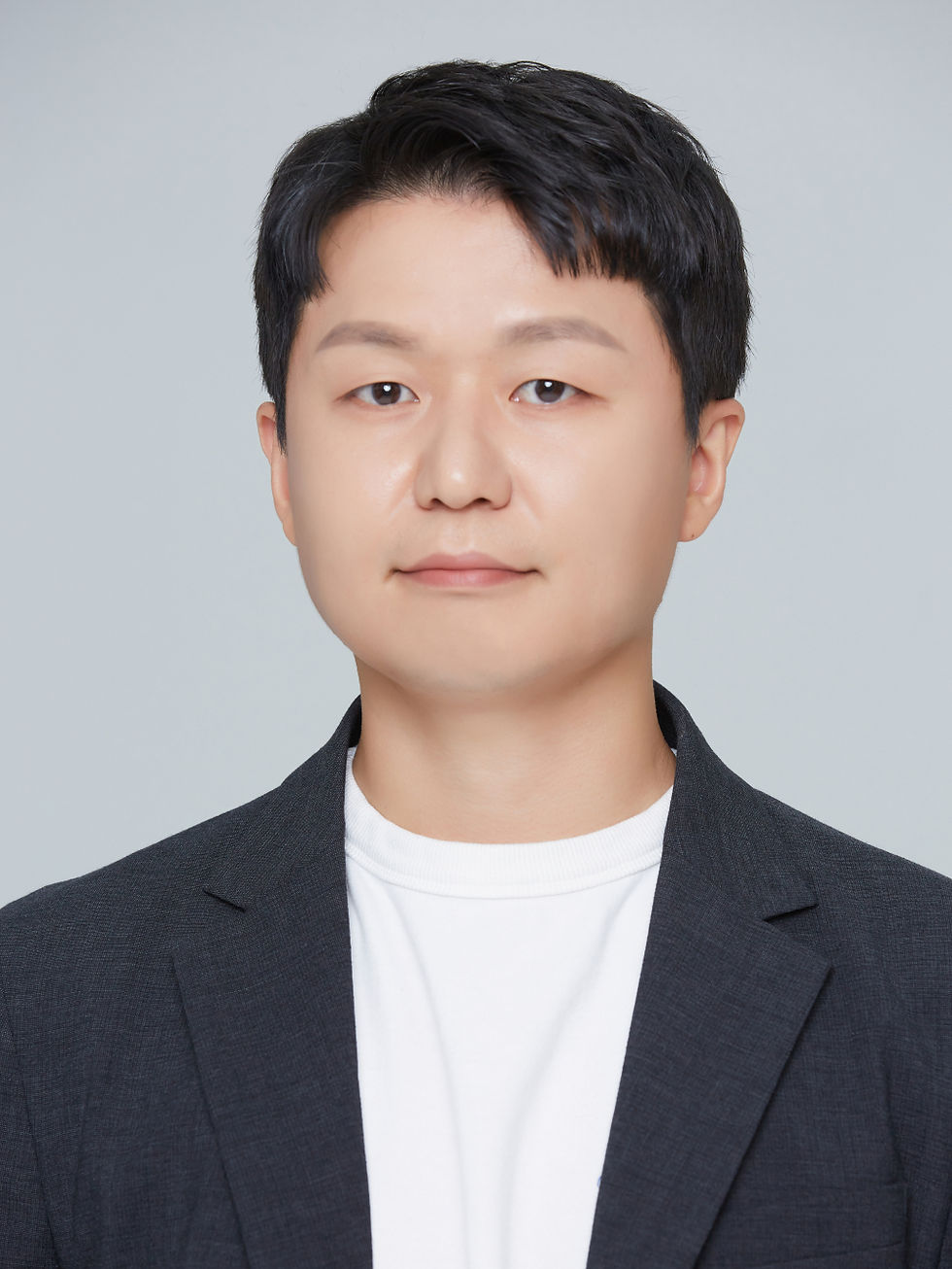
This intriguing leader is Dohyeong Kim, the Vice President of VIVLIV.
Leaving behind the heavy infrastructure of the platform industry, he has transitioned into the K-food market, where he can engage more agilely with a global audience. He is currently drawing a new map for success by transplanting his data-driven strategies onto the brand's powerful asset, Gkobak Gkobak. His mindset—opening a small side window to find a new path rather than stopping before a blocked road—is the most potent weapon a leader can possess in a volatile market.
I requested this interview because I wanted to bring his private voice and strategic insights, which have largely remained behind the scenes, to the world. We now begin the story of Vice President Dohyeong Kim: a strategist and eternal learner who is quietly proving his worth by breaking through every adversity.
Q. Your seven years at BGF and GS Retail followed a stable trajectory that anyone would envy. When you decided to leave that secure environment and plunge into the rugged startup world of 'Barogo,' what was the most honest question you asked yourself?
Everyone around me thought I had lost my mind. I even asked myself every night if abandoning a comfortable path I had spent seven years building at a renowned conglomerate was nothing more than the arrogance of a strategist. At the time, Coupang wasn't the absolute dominant force yet; it was the dawn of the startup era, with social commerce pioneers like Tmon and WeMakePrice just beginning to stretch their wings. In the U.S., Amazon Go was the talk of the town, and domestically, the emergence of Baedal Minjok and Yogiyo was fundamentally reshaping the way we shop.
While moving according to a set manual within a massive system certainly has its value, there was always a thirst in a corner of my heart to stand at the front lines where 'real change' was happening. I became convinced that in a high-density living environment like Korea, 'last-mile' delivery data would become the heartbeat of all future commerce. Looking at that wave approaching, staying hidden behind the fortress of stability felt more dangerous, in a sense.
Ultimately, when I decided to lay down the comfort of a conglomerate business card, the question that echoed in my heart until the very end was this: 'If I don't ride this wave now, will I eventually become someone who lacks the strength to leave even if I wanted to?' The choice between settling and slowly becoming obsolete, or heading into the wild to test my true mettle, is what led me to the new battlefield of startups.
Q. As a strategy planning lead, you spearheaded growth at Barogo and Luxrobo, but surely not every decision was the right one. Was there a moment when you had a sudden bout of self-doubt—wondering, "Am I really doing this right?"—or a specific error in judgment that you still painfully reflect upon?
The outbreak of COVID-19 right after my career move was an unprecedented opportunity for platform companies. Digital literacy among customers skyrocketed, the market exploded, and in an attempt to keep pace with that speed, I began churning out planning proposals like a machine, looking only at the data. Without taking a moment to look back, I produced business expansion plans with the absolute conviction that 'the data is right, so this service will definitely work.' Behind the Excel sheets on my desk, I was a strategist who didn't know the meaning of failure.
However, the reality I eventually encountered on the ground was starkly different from my projections. The 'efficiency metrics' I had designed were, in fact, becoming a source of cruel overwork for our sales staff and riders. The convenience of 'shorter travel distances' enjoyed by the customer was actually being filled by the desperate and intense labor of human beings. Specifically, an incentive system I designed to encourage more deliveries inadvertently pushed riders toward reckless 'bundled deliveries,' which ultimately degraded delivery quality and forced those on the front lines into hazardous working conditions.
In that moment, I realized with stinging clarity that a single row in an Excel sheet or a solitary figure in a proposal is directly linked to someone’s livelihood and safety. I felt, for the first time, the sheer weight of how my plans could impose a far greater burden on the field than expected. This experience left me with an indelible lesson: 'A judgment made without verifying the field can be the most dangerous policy of all.' Now, before making any decision, I first ask how my plan will change the 'temperature' of the actual workspace.

It is a privilege to assist in translating these profound reflections. Your career trajectory reveals a leader who has moved beyond the "ego of the strategist" to embrace a grounded, human-centric responsibility.
The following translations are crafted to reflect the articulate, professional, and deeply introspective tone of a native English-speaking executive.
Q. When you redesigned the commission structure at Yogiyo, it couldn’t have been a mere matter of mathematical formulas. When you were confronted with the reality that a single line in your Excel sheet directly impacted the livelihoods of countless small business owners, what ethical dilemmas and sense of responsibility did you feel as a strategist?
To be honest, I didn't start from a place of grand ethical mission or deep moral conflict. At that time, Yogiyo was in a state of emergency—a battle for 'survival'—with our market share halved due to issues surrounding the potential merger with Baedal Minjok. Coupang Eats was pushing in with sheer capital, while Baemin held a firm grip through branding. Yogiyo’s platform appeal had hit rock bottom, to the point where restaurant owners would simply turn off the app during peak hours. I introduced the strategic card of 'tiered commissions' as a game-changer simply to get the stalled 'flywheel' spinning again.
However, the process of fleshing out that plan was a living hell. To preserve company revenue while lowering commissions by even a mere 3 percentage points, we had to increase order volume by over 30%. I faced immense internal pushback from colleagues asking if that was even possible, and I constantly oscillated between conviction and anxiety. But I will never forget the thrill of seeing our market share surge during the Seoul metropolitan area pilot—a result where the owners, the riders, and the company were all satisfied. It was the moment tiered commissions became the first of their kind to be established as a standard system in the history of delivery platforms.
The real reflection came afterward. Watching the structure I designed being discussed in the National Assembly and becoming an industry standard, I felt a certain dread and a profound weight of responsibility. I witnessed firsthand that a single idea tossed out by a strategist does not stop at changing a corporate metric; it reshapes the order of an entire industry and functions as a literal way of life for tens of thousands of small business owners.
That was when it clicked: the decisions made at a strategist's fingertips are tied directly to the lives and interests of others. I felt that a logic designed for my own performance could become a social burden or a cost for someone else to bear. Now, I believe my greatest responsibility as a leader is to look beyond efficient strategy and think deeply about the ripples that decision will create.
Q. When meticulously crafted plans crumble due to external factors—as they did during your time at Tada (VCNC)—what was the driving force that allowed you to overcome that helplessness and find a breakthrough like the 'Mom & Dad Taxi'?
When I joined Tada, the so-called 'Tada Prohibition Act' had already been proposed, placing severe constraints on our growth. As a strategist, it is easy to fall into a state of paralysis when you are consumed by uncontrollable external regulations. However, I chose to focus exclusively on the variables we could control. The essence of a mobility platform is guaranteeing income for the drivers, and to do that, we had to find a way to boost the utilization rate during off-peak hours when calls were sparse.
I found the answer, unexpectedly, in my own daily life. As a father of two, I knew better than anyone the sheer ordeal parents face when trying to take young children to the hospital or simply head out during the day. There was a policy-driven service operated by the Seoul Metropolitan Government called the 'Mom & Dad Taxi,' and we decided to participate by layering our agile private-sector execution and operational know-how onto that existing framework.

By adding the value of safety to the comfort of our large vehicles, we provided a practical solution for parents for whom mobility had been a barrier. Ultimately, rather than being trapped by the narrow gate of regulation, we leveraged an existing policy trend to expand our horizons into a service for the 'transportation vulnerable'.
Furthermore, I envisioned an ecosystem where Tada takes responsibility for the entire lifecycle—from pregnancy to childcare—by planning the 'Pre-mom Tada' for expectant mothers. My time at Yogiyo and Tada was rarely smooth, but what sustained me through every crisis was the question: 'What is the most fundamental value we can create in this specific situation?'. Rather than despairing because a large door has closed, I look for the small side window that has been left open. That is my way of facing and breaking through adversity.
Q. You have already proven yourself through leadership roles at major platforms. What was the underlying reason for choosing Vivliv as your next battlefield?
On the surface, moving from platforms to consumer goods might seem like a radical pivot, but for me, it was a very natural progression. I have always closely observed the pace of industrial change, and a few years ago, I began to sense a new kind of opportunity opening up in the consumer goods market. Seeing K-culture become a global phenomenon and Korean food evolve from mere sustenance into a cultural experience gave me a sense of conviction. I realized that as long as product quality and content are solid, consumer goods can now cross borders at the speed of light.
In contrast, the platform industry where I spent my career often faces structural constraints—local regulations, heavy infrastructure, and complex interests with existing players—that make rapid global scaling difficult. Seeing even Korea’s top-tier companies struggle with international expansion, I felt a deep attraction to the scalability of consumer goods, which allow for a lighter, more agile way to test global customer reactions. When I asked myself, 'In which industry can I contribute with the most passion over the next decade?', the answer was unequivocally K-food. It is the field where the most uniquely Korean content can be showcased most intuitively.
Vivliv was an incredibly intriguing option at that moment. It already possessed a powerful brand in Kkobak Kkobab and a unique IP in Euddeum Shim, yet the 'white space' available to grow into a global brand seemed vast. Rather than staying in a role managing a well-paved road, I decided to join because I wanted to personally design the architecture for global expansion—transplanting the data and strategic techniques I mastered in the platform world onto these formidable assets.

Q. In a brand built around a powerful personal IP, the role of a COO often feels like a tightrope walk between symbolism and reality. When CEO Euddeum Shim’s philosophy and your cold, business-driven strategies clash, how do you convert that friction into healthy energy?
Kkobak Kkobab began with a lifestyle philosophy: 'Don't skip meals; eat regularly (Kkobak Kkobak).' CEO Euddeum Shim’s unique intuition and philosophy resonate powerfully with our customers. On the other hand, my strengths lie in cold metrics—market analysis, distribution structures, and P&L management.
In the beginning, these two perspectives did occasionally clash. I applied the same yardstick of data and efficiency I used in the platform world, but I quickly learned that the food industry cannot be explained by numbers alone. Because these are products people actually consume, I learned a great deal watching how customer reactions shifted based on a subtle difference in taste or a single point of brand sincerity.
Consequently, I have established a clear set of standards. The CEO’s philosophy drives the customer's 'choice,' while my strategy designs the structure so that choice can be 'sustained.' The first purchase might be driven by the name 'Euddeum Shim' and our marketing, but the second and third purchases are only possible if they are backed by the solid product experience and distribution system I design.
Ultimately, we aren't in conflict; we are engaged in a very precise 'division of labor.' When the CEO sets the direction through brand authenticity, I use data to validate that direction and optimize the profit structure. I believe that Vivliv’s healthiest energy emerges when philosophy and strategy complement each other from their respective positions.
Q. Vivliv’s flagship product, 'Kkobak Kkobab,' has already achieved immense success. Has this massive success ever backfired, acting as a source of pressure or an obsession to 'surpass the original' when conceiving new products?
In a company at a growth stage, the success or failure of a new product has such a profound impact on the entire business that it would be a lie to say I felt no pressure to outperform our previous hits. However, I realized that if I started setting my standards solely based on revenue or figures, my decision-making could become distorted.
Instead of being obsessed with 'bigger success,' I decided to focus on 'how much more diversely we can solve our customers' problems.' As high-protein and low-sugar options became a lifestyle staple, I redefined Kkobak Kkobab not just as a shake brand, but as the starting point for wellness foods.
Starting in the second half of 2025, as we expanded our categories, I held onto one single criterion: 'How naturally can customers accept this expansion under the name Kkobak Kkobab?' Rather than trying to seize every opportunity, we practiced 'selection and focus' by choosing areas where our brand could enter most persuasively.
To validate this hypothesis, I personally briefed buyers from major retail partners like No Brand and GS Retail to receive a cold, objective assessment from a market perspective. Fortunately, we gained deep empathy regarding our marketability, and the process of building conviction alongside external partners gave me great strength.
As a result of six months of collaborative planning, we launched eight new products, including noodles, Greek yogurt, and healthy ready-to-eat meals. Thankfully, customers accepted these products without feeling they were out of place. Now, based on that performance, I am enjoying the process of optimizing our portfolio further. Ultimately, it’s not about competing with the past; the process of proving how far our brand’s territory can expand is my greatest driving force.

Q. You joined as a COO who must prove commercial value. However, the food market moves so fast that sometimes catching a 'profitable wave' seems more beneficial than debating brand philosophy. When your business instinct says, "This will definitely work," but your stubbornness says, "This isn't our style," have you ever truly wavered?
To be honest, I do waver. Or more accurately, I feel it’s a 'waste.' Whether it’s lemon juice or trendy snacks, when the market catches fire, the Excel sheet in my head has already calculated how beautiful our revenue figures would look if we just added a product to the mix. There are moments when I think, 'Am I a fool if I don't jump in now?'.
But what I learned painfully during my platform days is that savvy consumers can sniff out 'engineered sincerity' in a heartbeat. Products hastily made just to follow the scent of money return as a poison to the brand the moment the trend dies down. That’s what I fear. As a strategist, I believe the greatest loss is having the narrative of 'healthy habits'—which Kkobak Kkobab worked so hard to build—be dismissed as 'just another merchant following trends' all for the sake of a few billion won in immediate revenue.
So, when conflict arises, I look at 'sustainable efficiency.' The LTV (Life Time Value) gained by maintaining customer trust in the name Kkobak Kkobab is mathematically far greater than the short-term profit of riding a trend. Ultimately, my 'stubbornness' isn't about pure righteousness; it is the most intelligent way to protect the brand. We might miss out on being the No.1 in immediate sales, but we will be the brand that remains in the pantry ten years from now. That is the real 'commercial value' I refuse to give up.

Q. You’ve transitioned from a strategist designing intangible services to a leader handling products people "eat and touch." What have you realized anew while overseeing actual production and cost structures?
In the platform world, if the logic was sound and the data was validated, there was a high probability the service would track as intended. But in the food industry, there are variables of a completely different dimension. What I learned while overhauling samples dozens of times is how easily a 'perfect plan' in my head can crumble in the face of actual raw material blending or microscopic differences in the manufacturing process.
The last few years, in particular, have been fraught with uncontrollable external variables. Seeing raw material costs spike due to global trends and packaging prices fluctuate with international politics made me feel the 'reality of manufacturing' to my core. I realized that my sense of simulating costs on an Excel sheet was quite simplistic compared to the massive shifts in the global supply chain.
The biggest challenge has been finding the compromise between 'quality' and 'price.' No matter how much you elevate a product with premium ingredients, it loses its reason for existing if it crosses the customer’s price resistance threshold. As a leader, it was painful to abandon products we were internally satisfied with just before launch because the P&L simply didn't work.
Ultimately, what I am learning now is 'optimization within constraints.' It’s about more than just proposing a good direction; it’s about finding a balance amidst the myriad of realistic constraints like COGS, manufacturing processes, and market pricing. I am learning every day that this is the most important virtue—and form of humility—required in the manufacturing industry.
Q. You tell your customers that "small habits change lives," but what about your own daily life? When burnout hits or the boundaries between work and life blur, what is the 'small habit' that protects you?
To be honest, I’m someone who rarely has a boundary between work and life. Since joining the startup world, immersing myself day and night has been my normal. However, running Kkobak Kkobab has shifted my perspective. I felt a sense of shame, realizing that if my own life was a mess while I preached small changes to my customers, my brand would lack authenticity.
So, these days, I am consciously creating my own refresh routines. They aren’t grand; it’s about going out and experiencing trendy pop-up stores or new products from other brands—things I used to pass by without a thought. If I think of it as market research, it becomes work, but if I view it as a 'walk to awaken new senses,' it becomes a source of vitality.
I’ve also made a commitment to myself that I try to keep no matter how busy I am: eating at least one proper, nutritious meal a day. And whenever I encounter a new product, I jot down a quick note: 'Why was I drawn to this?' While I still miss these moments when things get hectic, I believe these small records and single meals are the solid foundation that sustains me and helps me make better decisions.
Q. On this lonely, intense path where 18 months feels like three years, is there a single word from a colleague that truly makes you smile or helps you stand back up?
In the past, I only had to immerse myself in my specialized field, like planning or strategy. Now, being in a position where I’m responsible for the entire household of the organization, the weight is undeniably different. I’ve run without weekends for the past year and a half, and frankly, there were moments when I hit my limit, both mentally and physically.
What pulls me back up, though, is the feeling that 'we are in this together.' I vividly remember when we were trying to expand into chilled products with Greek yogurt—a first for the brand. There was significant internal concern because it was an unfamiliar category. That’s when a colleague said to me: 'We can’t be sure of the outcome, but I’d love for us to just try the best we can.'
That simple, plain sentence resonated with me more than any grand encouragement. It allowed me to let go of the obsession that I had to carry all the responsibility alone, and it gave me the courage to take another step into the unknown. Thanks to that, the Greek yogurt launch was a success and is now delivering very meaningful results.
The weight on my shoulders as a leader will likely remain heavy, but knowing I have colleagues who believe in the same direction and quietly stand by my side makes me smile again. Their presence is the most powerful engine driving me forward.

Q. You have spent your career as an expert in the Korean market, but now you are leading global business development. As you carry out the mission of planting Vivliv’s flag in unfamiliar territories, how are you transforming that raw, unfamiliar fear into 'conviction'?
I’ve spent the vast majority of my career on the intense front lines of the domestic market. Naturally, when I first received this global mission, I faced a vague sense of dread, wondering, 'Will our products actually resonate in an unfamiliar land?'
However, as I delved deeper into the market, I discovered an interesting paradox. In the past, I viewed competitors solely as rivals to be defeated. In the global arena, I began to see them as grateful colleagues who had paved the way before us. Seeing K-beauty establish a path of trust and observing earlier K-food pioneers validate marketability gave me the conviction that 'the stage has already been set.'
Whenever doubt creeps in, my instinct is to head straight to the field. In the second half of last year, I traveled through four Asian countries, meeting manufacturers and scouring the markets. While tastes varied slightly by country, the 'thirst' for enjoying protein as a convenient meal was universal. After seeing the answers with my own eyes and pounding the pavement, the fog in my head cleared, and a vivid strategy took shape.
That conviction became even more solid during a recent meeting with the Amazon team. Overseas markets are typically dominated by bulky, utilitarian protein supplements meant for muscle growth. In contrast, we proposed 'K-protein'—packaged in sophisticated, small portions with a clear context of dieting and wellness. Confirming that this differentiated approach resonates locally caused my remaining fears to vanish completely.
Ultimately, global business is about people. Rather than trying to solve everything myself, I built a team with colleagues who have extensive experience in breaking into overseas markets, and we are now planting meaningful flags one by one. Consequently, what I feel now is less like anxiety and more like a pleasant puzzle of how to differentiate ourselves in this vast market. This year, we plan to continue our authentic challenge, including our entry into the U.S. market.
Q. You have always competed on battlefields where results are instantaneous. Does the long-term rhythm of 'brand building'—which isn't always immediately proven by numbers—ever feel frustrating or tedious to you?
The last ten years of my life were spent on battlefields where reactions were real-time. When I first entered the consumer goods market, the static nature of time—where no visible changes happened immediately—felt unfamiliar and, at times, stifling. I even felt the anxiety of wondering, 'What if my judgment is wrong and the brand just stagnates?'
But as I experienced it firsthand, I realized my assumption was wrong. Now, I feel that this market is a far more dynamic battlefield than any platform. A platform is a structure where you add features onto a pre-built foundation; in consumer goods, you have to receive a cold, objective evaluation from the market starting from zero every time you launch a new product.
In fact, while the Kkobak Kkobab original line is a mega-hit that has sold over 10 million units over four years, the reaction to our new high-protein, low-sugar products was initially quite different. Even if the existing product is number one, customers hesitate to open their wallets for a new product simply because there are no reviews or prior purchase experiences. It was a moment where I painfully realized that even a '10-million-unit myth' starts back at zero in the face of a new product.
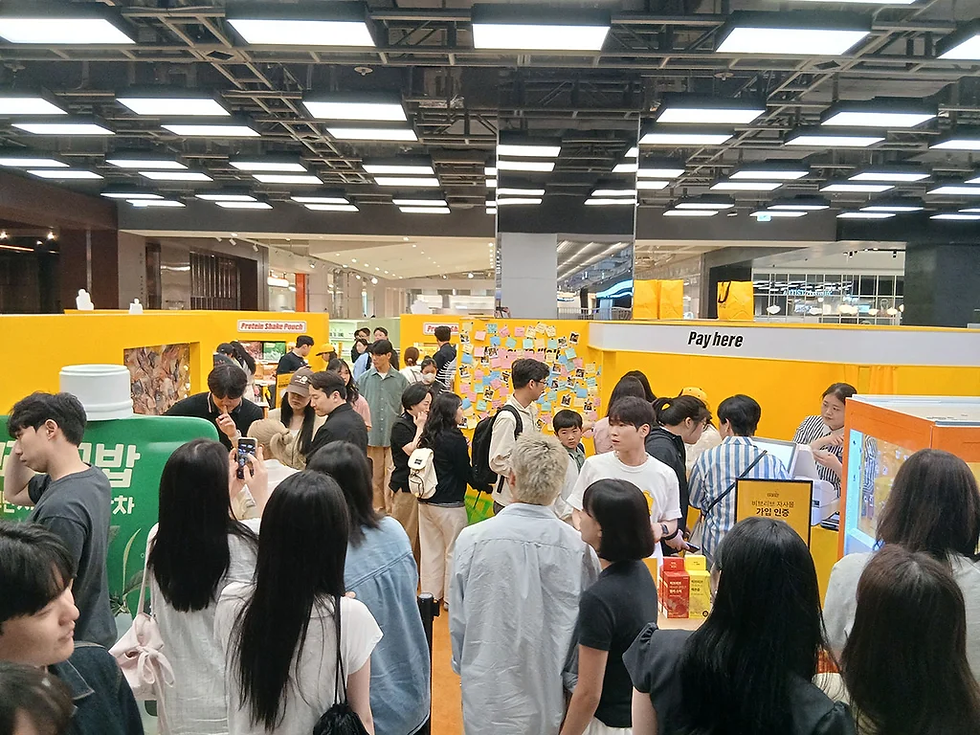
So, rather than just promoting, we decided to give customers a direct experience. That was the genesis of our pop-up store at The Hyundai Seoul. We didn't outsource it; my team and I handled everything from design to space planning day and night. We obsessed over how to showcase the identity of Kkobak Kkobab most effectively while minimizing costs.
As a result, 20,000 customers visited over two weeks, and Hyundai Department Store gave us feedback that this was an unprecedented achievement in the food industry. This experience allowed our new products to settle into the market quickly, and the raw feedback we gathered on-site became a precious asset for planning our next products.
Through this process, I realized that consumer goods aren't about a single big win; they are structured around an infinite repetition of new battles every single day. For me, this 'time of endurance' isn't a tedious wait—it is a high-density process of preparing for the next victory. To avoid stagnating after a single success, one must move with tension at every moment. When I think about how those repeated challenges accumulate to become a massive asset of trust called a 'brand,' every daily battle feels profoundly joyful and meaningful.
Q. If you were to strip away the impressive titles and professional achievements, as the human "Dohyeong Kim," how do you wish to be remembered by your colleagues and the customers of Vivliv?
"To be honest, I am not a 'Superman' type of leader who solves everything alone. I know better than anyone that no success can be sustained through the strength of a single individual. That is why I value the synergy created when the right people meet the right structure far more than I value individual brilliance.
I believe the true role of a leader is to sift through the countless problems scattered across the field, identify the core essence of what we must truly solve, and provide the team with clear directions and options. Rather than being remembered as a great solo player, I want to be a reliable enabler who helps our team move more fluidly to achieve the best possible results.
If my colleagues remember me as a leader who gave them the conviction that 'working with this person makes the path ahead clear,' I would be truly happy. Instead of pretending to have all the answers, I strive to be someone who agonizes over the problems alongside them and takes full responsibility for the outcomes until the very end.
For our customers, I don’t wish to be remembered as a grand entrepreneur, but rather as the person who eased their worries at the breakfast table every morning. I want our promise—that 'small habits change lives'—to be more than just a slogan. I want it to be proven in someone’s refrigerator and inside their bag on the way to work. If a single pack of Kkobak Kkobab made someone’s day even slightly lighter, I believe I have achieved a sufficient victory on this battlefield."


Comments