


Aesthein CEO Sun-young Lee: From Social Worker to Global Beauty Pioneer
- Jun 2
- 23 min read

Sun-young Lee, the CEO leading Aesthein—a premium beauty brand built for professionals—grew up in an environment so harsh that she spent her youth living in a shipping container. Before stepping into the business world, she chose the path of a social worker, spending eight years standing by the side of youth in crisis. What she learned most bitterly on the front lines of social work was that fleeting sympathy changes nothing. Even now, as an entrepreneur, the sense of moral obligation from those years remains the foundational root supporting her management philosophy.
To be perfectly honest, as I prepared for this interview, a nagging, uncomfortable question kept rising in my mind. If someone who had survived that level of deprivation finally took hold of capital, it would surprise no one if they became obsessed with wealth. It seemed only natural that they would aggressively scale their business and maximize profits. Yet, her actual footsteps told a completely different story. Taking care of her colleagues and agonizing over how to deploy capital more effectively for the marginalized—this was a far cry from standard business logic, at least as I knew it.
Paradoxically, it was this very "contradiction" that held my attention until the end. I reasoned that if someone who had walked through such profound scarcity was building a business on something far more unyielding than money, there would undoubtedly be a story worth listening to. For the countless leaders who find themselves wavering every single day in front of their income statements, I hope the story of this stubbornly principled entrepreneur serves as a grounded yet profoundly heavy wake-up call.
Q. You spent eight years working as a social worker for youth before stepping into the aesthetics industry. Was there a specific turning point that led to this transition?
For eight years, I was a social worker, protecting youth in crisis from the closest vantage point. Counseling children who had run away from home or were exposed to dangerous environments always broke my heart. But at the same time, I faced the cold reality that the role and responsibilities of a social worker alone had clear limitations when it came to actively supporting them. Temporary sponsorships or emotional comfort could never fundamentally change their lives. What these children truly needed was not to remain passive beneficiaries of welfare, but rather to receive "practical help" and be placed within a "sustainable structure" that would allow them to stand on their own two feet against the prejudices of the world.
This unresolved thirst—“Is there a system where children can learn a specialized skill within a safe harbor and achieve true independence?”—is what drew me into the business world. I realized that to build a viable foundation for self-reliance, I had to understand the mechanisms of business management. So, I joined a startup consulting firm and learned the realities of the market from the ground up.
It was during this time, while handling the incubation of an aesthetics brand by chance, that I gained a powerful conviction. I realized that aesthetics was the "ultimate skill for independence" I had been searching for. It is a field where, regardless of academic background or pedigree, mastering a refined manual technique allows anyone to stand proudly as a self-sufficient professional.
Therefore, entering the aesthetics business is not a detour or a departure from my path. It is the process of manifesting the mission from my days as a social worker, using business as the most powerful and sustainable vehicle possible. The "deep-seated responsibility toward people" that was etched into my very core during my social work days remains the strongest root sustaining my business today.

Q. Acquiring your first shop must have been quite a gamble at the time. What drove you to move forward so fearlessly?
To be honest, my ability to move so fearlessly back then didn't stem from flamboyant confidence. It came from the reality of having my back against the wall. At the time, I was navigating a major turning point in my life—a divorce—and facing the daunting reality that I had to rebuild an independent life entirely on my own, without anyone's help. During that period, when I was desperate to build a foundation for sheer survival, I happened to receive an offer to take over a shop in a prime commercial location. To me, it felt like my only breakthrough.
I had no capital for the acquisition, but I remembered an acquaintance of my father who had always looked kindly upon my passion. I gathered my courage and went to see him. I didn't just ask for a handout; instead, I persuaded him with hard numbers, presenting the shop’s historical revenue, my projected profit structure under my management, and a concrete repayment plan with an interest rate higher than what the banks offered. Looking back, it was incredibly reckless. Yet at that moment, my desire for independence far outweighed my fear of rejection. I suspect he saw that fierce determination in my eyes.
That choice meant far more to me than simply starting a business. It was a desperate yet defiant declaration that I would take the steering wheel of my own life, rather than leaving it in the hands of others. The courage to transform a crisis into an opportunity during my most vulnerable and bleakest moment ultimately became the very first stepping stone toward building the brand Aesthein today.

Q. Even though you operate in the aesthetics industry—a field that naturally prioritizes outward transformation—you consistently emphasize "inner value" and "self-love." As a beauty expert, where do you set your standard for true beauty?
Behind the confident facade I show today lies a deep childhood scar left by a time when I loathed poverty more than death itself. When my family collapsed during the Asian Financial Crisis (IMF), our financial situation plummeted overnight, leaving my parents and their five daughters in absolute squalor. It was routine for mice to drop from the ceiling while we slept at night. On days with torrential downpours, the sewers would burst, washing all kinds of filth into our living space. I can still vividly recall the miserable, reeking sight of waste backwashing from our outhouse toilet, filling up our room. Back then, I felt my circumstances were utterly pathetic, and I became fiercely obsessed with my outward packaging throughout my twenties, desperate to hide that reality from the world.
I forced myself to look sophisticated just to avoid looking poor. Yet, no matter how hard I worked to gain validation from others, an unbearable emptiness would wash over me the moment I returned home. I had wrapped my exterior in a beautiful package, but behind that curtain, I didn't even love the person I truly was. It was only after enduring that profound, hollow despair every single night—washing off my makeup and facing myself in the mirror—that I finally woke up. I realized that what truly matters is not how others perceive you, but how you treat yourself.
The novelist Boris Pasternak once wrote, "The scar is the place where the light enters you." For me, the agonizing deprivation and wounds of my youth are not a source of shame to be ignored. Instead, they became a radiant gateway that allowed me to look deeper into the pain of others and form a beauty philosophy centered on treating people with utmost dignity.
This is why I hope our salon directors and clients don't get completely swallowed up by the mere "results of looking pretty." Instead of hiding behind a forced, manufactured appearance, I want them to prioritize inner healing—facing and embracing the person in the mirror exactly as they are.
Ultimately, beauty should not be an artificial adornment meant for display. It must be a "healing process," an act of genuinely honoring your own mind and body, which have fought so hard to endure this harsh world. I know firsthand how incredibly resilient life becomes through that small shift of holding yourself dear and nurturing your own well-being. Guiding people through that journey is the most authentic value I wish to deliver through Aesthein.
Q. Your relationships with your partners and employees are solid, with many staying by your side for over a decade. What is your secret to communication, especially in letting down your managerial authority to maintain such long-lasting, tight-knit bonds?
From the very beginning, I openly tell my team, "Don't put me on a pedestal, and don't expect me to be perfect just because I'm the CEO." After all, I am just another human being with my own flaws and shortcomings. Because of this, I define our organizational structure not as a vertical hierarchy, but as a "functional community" where everyone fulfills their own unique role. My role is to chart the brand's direction and support the growth of our partners, while our employees bring their specialized expertise to their respective positions. There is merely a difference in our roles; as human beings, my golden rule is that everyone is equally invaluable.
Typically, when an employment relationship is established, it is easy to become obsessed with short-term productivity—pushing people relentlessly for immediate outputs relative to the resources invested. Instead of binding people with excessive expectations, however, I want them to work proactively and fulfill their responsibilities within a secure, stable environment. Sure, there are times when I fall short, but because my team knows I'm not perfect, they are understanding, thinking, “Well, our director can be a bit clumsy with these things.” Likewise, rather than reprimanding them for mistakes, I make an effort to look at the underlying context and their true intentions first. Once a culture of acknowledging mutual vulnerability took root, an atmosphere of mutual respect naturally formed without me ever having to force my authority.
The German philosopher Immanuel Kant famously said to treat people "never merely as a means to an end, but always at the same time as an end." Following this principle, I never speak harshly to team members who choose to leave the company to forge their own paths or take on new challenges because their alignment shifted. Instead, I genuinely cheer them on and applaud them, saying, "Go to a stage that can push your growth even further and live out your dreams." What I guard against is disrespect or selfishness within the organization; a leap for personal development is something to be celebrated as a leader.
By treating people as the ultimate destination rather than a tool for business, we have managed to remain a reliable source of mutual support and stay in touch, even after ten long years.

Q. It took four years to develop a single cream, and you went through over 150 rounds of sampling—to the point where the manufacturer almost gave up. Given how inefficient that is from a business perspective, what made you so unyielding?
To be honest, those who understand the inner workings of the cosmetics industry call my approach foolish. From a purely financial standpoint, the most profitable route is to take a decent formula proposed by a manufacturer, toss in a few trendy ingredients, and rush it to market. But I am someone who has spent over a decade looking directly into the desperate eyes of clients on the front lines. When individuals who have been given up on by dermatologists come to an aesthetic clinic holding onto their last shred of hope, I simply couldn’t hand them just "any ordinary product." I believed that if a cream is crafted by experts, it must deliver an immediate, undeniable sense of awe—a profound "wow factor"—the moment it touches the skin, leaving the user completely convinced of its value. Without that visceral impact, I saw no reason to introduce the product to the world.
That journey was incredibly lonely and intense. I knocked on the doors of more than ten different manufacturers. Eventually, the researchers threw up their hands, exclaiming, "Director, cosmetics cannot alter the skin this dramatically. What we have now is more than enough." But how could I stop when my own sensitive skin hadn't reacted yet, and when I couldn't see the transformation with my own eyes? Whenever a manufacturer backed out, refusing to go any further, I would seek out another, present my data, and persuade them all over again. Going through over 150 rounds of sampling was certainly a testament to my stubbornness, but it was also the only way I knew how to push past the limits of what was deemed possible.
The reason I obsessed over this so fiercely is that this product is directly tied to the professional pride of our Aesthein salon directors. I didn't want our product to be just the creation of Sun-young Lee; I wanted it to be a "collective asset" that embodies the hard-earned wisdom of our directors, who have seen it all in the field. That is why I sent samples to 100 directors, and if even a single person said, "This leaves a little to be desired," I immediately went back to square one without hesitation. I wanted to be able to tell them with absolute confidence, "This product is the ultimate proof that will safeguard your expertise, finalized through your very own clinical participation."
Ultimately, those four years were not spent merely mixing a liquid formula; it was a process of sculpting an unshakeable bond of trust within our community. Thanks to that dedication, our directors no longer have to struggle to sell the product. Because they were directly involved in the planning and manufacturing process, their pride alone conveys the ultimate assurance to their clients. That stubbornness, which once looked so foolish, ultimately became the greatest asset that binds us together as one.

Q. You strictly restrict distribution, insisting that your products be delivered exclusively through the "hands of experts" at aesthetic salons. From a purely financial standpoint, this could be seen as leaving money on the table. Is there a specific reason you adhere so rigidly to this distribution policy?
People say that to me all the time. They tell me I could make several times more money if I opened up the products to online retail, asking why I choose to walk such a difficult path. But there is a definitive reason why the world’s top ultra-luxury brands strictly cap their number of global storefronts and maintain rigorous control over their distribution channels. It is because protecting the "brand's unique value and heritage" is infinitely more critical than chasing immediate mass sales.
For me, Aesthein is not just a business selling cosmetics; it is about safeguarding the "professional value" of the aesthetics industry. The mechanism of Aesthein's products is meticulously designed to unleash 100% of its intended efficacy only when paired with the sophisticated manual techniques of a professional. Looking at today's market, mass-consumer cosmetics often casually throw around the title of "aesthetic skincare" simply because they are distributed to one or two local salons.
However, true aesthetic skincare cannot produce those dramatic, salon-level "Before & After" clinical results without the precise diagnosis and touch of a seasoned expert holding a state-licensed esthetician certification. No matter how exceptional Aesthein's product performance is—allowing clients to feel a difference through home care alone—it can never completely replicate the profound depth of an on-site expert who thoroughly analyzes the skin's ecosystem and delivers bespoke, high-touch care.
Another reason is the "trust" I share with the salon directors who believe in me and walk this path by my side. If our directors pour their hearts into managing a client's skin, only for that client to bypass them and purchase the product online, where do the directors get compensated for their technical skill and devotion? I view our directors not merely as retail outlets, but as "co-partners" who jointly complete the brand's value. This is why I personally monitor unauthorized distribution channels and predatory price dumping, taking swift and thorough action. Protecting a stable revenue structure and the professional pride of our partners is the most fundamental responsibility of the headquarters.
While some use the term "win-win cooperation" merely as a marketing buzzword, to me, it is a daily practice to ensure that our salon directors can confidently command fair prices and be treated as true experts. Rather than chasing immediate high revenues, a far more meaningful success for me is hearing our directors say, "Partnering with Aesthein has elevated our salon’s prestige and brought financial stability." Instead of moving fast alone, I choose to go far together within a protective sanctuary that shields our directors. I believe we must honor this principle if Aesthein is to endure as a timeless masterpiece.

Q. With the recent surge in the "K-Beauty" phenomenon, the number of international tourists visiting Korea specifically for skincare has spiked dramatically. From your perspective on the front lines, what do you see as the core of the "Korean-style aesthetic experience" that they expect?
If you look at the salons in Myeongdong or Gangnam these days, the increase in foreign clientele is truly conspicuous. However, meeting them firsthand on the ground has made me realize that the core of the Korean aesthetic experience they crave isn't just about a "trendy procedure" or "good cosmetics."
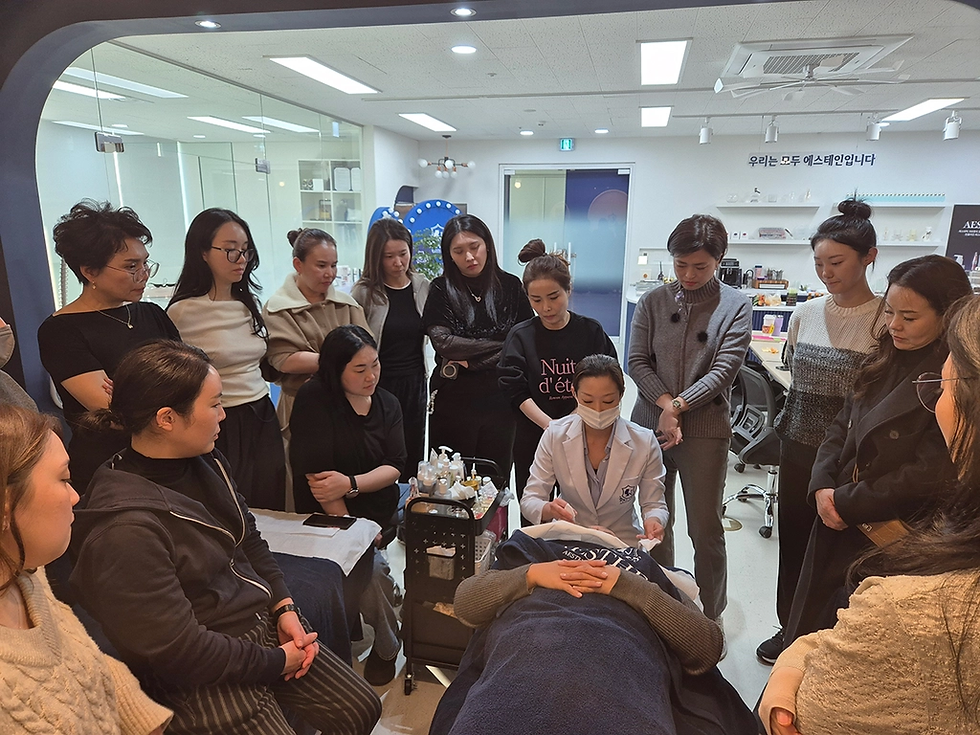
Skincare abroad is often executed mechanically, strictly adhering to a predetermined course or product manual. Conversely, the Korean aesthetic experience shifts the paradigm the moment the client walks through the door. Directors scrutinize the client's skin with incredible granularity—not just analyzing their skin type, but measuring heat levels, redness, dryness, facial edema, and even taking into account their condition and lifestyle habits that specific day. Based on this data, they synthesize a highly customized treatment directly on the spot, tailored for that single individual. I believe this "flexible and precise bespoke care" is our ultimate competitive edge, something that cannot be easily replicated anywhere else in the world.
In fact, what shocks international clients the most when they visit our salons is this exact "mind-boggling level of detail." Take cleansing, for instance. For us, cleansing is not just about wiping off makeup; it is viewed as the vital first step of observation, feeling the skin texture beneath our fingertips. Even when applying an ampoule, directors modulate their pace in real time by reading how the skin absorbs the formula. Furthermore, the hand techniques of our directors aren't about aggressively rubbing the face. They map the flow of the lymphatic system, release muscle tension, and soothe the skin’s heat with profound precision. This leads clients to marvel, saying, "I have never in my life experienced a treatment that looked at my face with such meticulous care."
Another fascinating element is the transformation they feel after the session is complete. Many international clients initially arrive expecting loud, instantaneous cosmetic changes. Yet, when they step off the treatment bed, their greatest reaction is often to how radiant their skin has become, how the redness has completely vanished, and how indescribably comfortable and light their entire face feels.

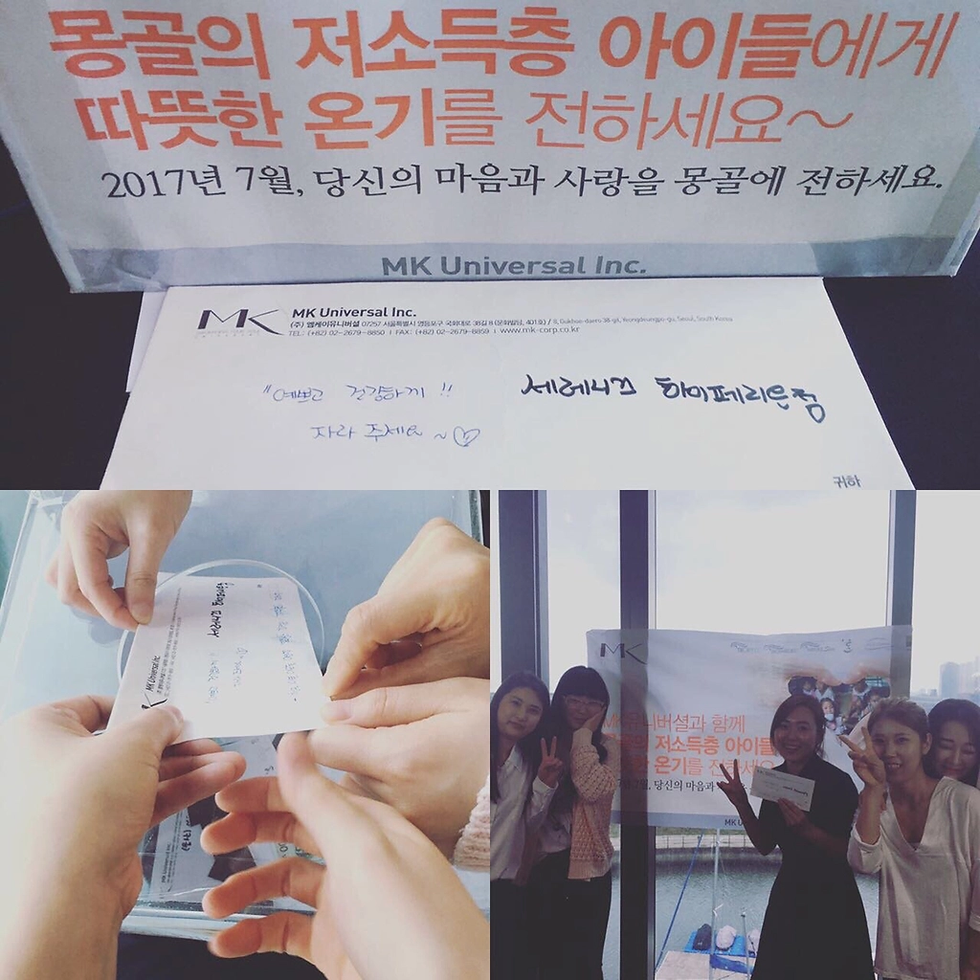
Q. From donating 100% of exhibition proceeds to sponsoring young adults transitioning out of foster care, you have been remarkably proactive about giving back since the earliest days of your business. This is no easy feat, even after a business stabilizes. What does "giving back" truly mean to you? It seems to carry a much deeper significance than the mere satisfaction of doing a good deed.
I firmly believe that money is like water: "if it stagnates, it rots; but when it flows, it breathes life." Ever since my time as a social worker, the youths who need to stand on their own have always occupied the tenderest place in my heart. For children thrown into the world without parental care, a single meal is not what they desperately need; what they truly crave is a solid foundation to rise on their own and a single adult who genuinely believes in them. Because I know the agonizing depths of that poverty and helplessness firsthand, I wanted to become a reliable shield for those kids, sending them a clear message: "We've got your back."
This is why I always involve our salon directors whenever we give back. The reason I donate exhibition profits under our collective community's name rather than my own is that I want to cultivate a profound sense of pride within our directors. The moment they realize, "The skills I possess can become the seed that transforms someone's entire life," this profession is elevated from a mere skincare job into a noble calling that saves people. Witnessing the deepening gaze and professional pride of our directors through the act of giving is my most rewarding and happiest moment as an entrepreneur.
In fact, the beauty industry holds a magnificent precedent of a brand scaling globally through this exact model of social return: The Body Shop. Its founder, Anita Roddick, eschewed massive advertising campaigns in favor of channeling profits back into environmental protection and Community Fair Trade that supported local self-reliance. In doing so, she secured the absolute trust of global consumers and partners alike, building a world-class enterprise. She famously noted that a company's business should not merely be about making money, but rather a celebration of changing the world for the better. Through Aesthein, I am currently proving that very same virtuous cycle.
To me, giving back is not an act of patronizing charity where I sever a piece of what I own. Instead, it is a process of a "virtuous cycle" from which I draw even greater strength. I believe that when the revenue we generate is deployed to illuminate the darker corners of the world, the longevity and structural integrity of our profession grow infinitely stronger. Achieving the most fundamental "human-centric care" at the very pinnacle of the glamorous beauty industry—that is the ultimate driving force I want to demonstrate to the world through Aesthein.

Q. Recently, the aesthetic industry has been spotlighting clinical programs that yield results as dramatic as medical dermatological procedures. What is your vision for elevating aesthetics beyond simple relaxation and establishing it as an undeniably "specialized professional domain"?
It has always broken my heart to see aesthetics dismissed merely as "a place to get a massage for a quick mood boost." The clinical data and manual techniques our directors have accumulated over decades possess a power far more delicate and potent than any machine. Therefore, I wanted to engineer a treatment program that delivers results as powerful as dermatological lasers, while maximizing the unique strengths of aesthetics: safety and skin recovery. A technology that triggers the skin's own regenerative process through active ingredients without relying on artificial trauma—this is how I define the future value of aesthetics.
The common methods of ablating the epidermis or applying severe irritation might yield rapid short-term results, but over time, they inevitably weaken the skin's natural barrier. Conversely, we focus on correcting the root mechanisms so the skin ecosystem can restore its own health. My goal is for our directors on the ground to be recognized not as mere procedural operators, but as true "skin experts" who perfectly diagnose and prescribe for the skin's structural matrix. My ultimate objective is to elevate the prestige of the entire industry so that clients contemplating medical intervention will seek us out with the conviction that "fundamental resolution is entirely possible at an aesthetic salon."
At the end of the day, my obsession with technical perfection stems from a desire to protect the lives of our directors who are fighting so hard on the front lines. This precious profession cannot be sustained long-term if they are constantly draining their bodies and minds by being dragged into reckless price wars. I believe that when a director possesses absolute conviction in her own technique and the results are visibly proven, she can command her true value with dignity, completely unswayed by client demands.
Aesthetics is not merely an alternative to medical procedures. It is a sovereign domain capable of simultaneously delivering exquisite, tailored care alongside scientific transformation. When a client places deep trust in a salon, recognizing that "the level of expertise here is different," the directors finally feel the profound weight of their professional calling and rewards. Building an environment where our partners are fully respected as experts and can operate a stable business—that is the authentic pride and competitive edge Aesthein aims to prove in the market.
Q. We understand you have laid out a plan to fully fund storefront signage and interior renovations once a partner salon achieves a specific milestone. This represents a substantial financial burden for the headquarters. What is the real driver behind adhering to such an unprecedented win-win policy?
Many people ask me with concern, “If you reinvest the corporate margin like that, what is actually left for you?” But I have never once viewed our salon directors merely as clients or consumers purchasing products. Out of countless alternatives in a cutthroat aesthetics market, they are the ones who chose to place their absolute faith in the value of Aesthein. Because I know the immense weight of that trust, I believe it is only right that the milestones our directors achieve on the ground are funneled directly back into their workspaces.
Upgrading interiors and replacing storefront signs goes far beyond merely beautifying a physical space. It is a visual testament proving to our directors, “You are not alone; Aesthein headquarters is always backing your business operations with unyielding support.”
Howard Schultz, who scaled Starbucks into a global powerhouse, once noted that if partners are not filled with pride, a brand capable of moving customers can never be born. While a pleasant salon environment naturally elevates client trust, it most importantly transforms the professional pride of the director who commands that space. When you become genuinely proud of your workplace, a unique confidence as an expert emerges. That very confidence ultimately acts as a magnet, drawing in clients and driving substantial revenue growth. In short, this support is not a mere expense; it is the most definitive investment to strengthen the brand’s fundamentals.
Ultimately, the Aesthein I aspire to build is not a deformed structure where only the corporate headquarters grows bloated. My true objective is for every single aesthetic director who trusts and uses Aesthein—at this very moment across the nation and around the globe—to become the protagonist of the brand, ensuring that our partners' salons stand tall as the most competitive, incomparable spaces in their respective regions.
Q. It is intriguing to see whether Aesthein's philosophy and clinical data can resonate globally beyond the domestic market. What is the current status of your exports, and what are your concrete plans for the global market moving forward?
To be honest, Aesthein is a brand that has been meticulously and ruthlessly prepared from day one with global standards in mind. That relentless effort has finally borne fruit; we recently successfully launched inside Printemps Department Store—the very symbol of France and the epicenter of global premium beauty—and have officially begun supplying their local mainstream market.
A decisive momentum for this expansion was our pop-up beauty event held at the Dolce Resort in Versailles, France, this past March. Rather than simply showcasing the superficial exterior of our products, we presented the entire spectrum of our vast clinical data and sophisticated technical processes, heavily refined alongside 100 Korean aesthetic experts. It successfully cleared a rigorous vetting process, proving itself as a peerless operational model ready for immediate implementation in high-end French spa environments. I will never forget the moment discerning European buyers and local beauty insiders nodded in agreement upon verifying the unique mechanisms of Aesthein.
In addition to this, within the Asian sphere, we are currently in concrete discussions for an expansion into Japan—a beauty powerhouse that deeply favors intricate care systems—while simultaneously advancing our optimization work to enter North America, the world’s largest market.
Every time I confront the international stage firsthand, there is a reality I consistently face: an approach that relies solely on temporary marketing or the fleeting trend of “Korean cosmetics are popular right now” can absolutely never achieve longevity. Therefore, we strictly avoid short-term, volume-pushing exports that merely dump inventory. Instead, we communicate deeply with core partners who will take ownership of premium local distribution. We expand our market footprint by directly transplanting Aesthein’s proprietary aesthetic techniques and educational frameworks into the local territory. Transcending borders to deliver the safest and most definitive skin solution to local clients battling problematic skin conditions is our core global strategy.

Q. Ultimately, a corporation’s primary objective is to pursue profit. There are cynical viewpoints suggesting that your aggressive philanthropy—especially given your current corporate scale—might just be a marketing gimmick or a waste of resources. As a business leader, how do you respond to this cold reality?
I never deny the reality that a business must generate profit. Solid financial stability is the prerequisite to taking responsibility for employees, investing in R&D to build superior products, and ultimately driving greater social value. However, if a company chases only short-term profits, I believe it ceases to be a true business and becomes mere "peddling." While those around me advise that I should focus those resources entirely on marketing, I am constantly agonizing over what kind of tangible footprint our achievements can leave on society.
That said, I learned through a bitter failure that diving into philanthropy blindly, armed only with the justification of public interest, is not the answer. Years ago, I participated in a health management project for the underprivileged. Aesthein’s products are high-value, professional, hyper-functional lines; however, for some of the beneficiaries at the time, immediate livelihood support was far more urgent than skincare. I watched with deep self-reflection as these expensive products, donated with the purest intentions, failed to serve their original purpose and were instead liquidated for cash on certain online channels. It was a stark lesson that no matter how pure your motives are, if you misread the actual reality and needs of the beneficiaries, the efficacy of your support plummets.
Ultimately, if a business is not sustainable, its goodwill cannot last, and aid that detaches from the context of the field easily loses its original intent. Therefore, rather than abandoning social value creation, we pivoted our donation process into a far more practical and sophisticated framework. We completely shifted from in-kind product donations to cash-based contributions, and we currently focus on funding initiatives that practically assist vulnerable populations in achieving self-reliance, both domestically and internationally. As part of this effort, we are major donors to World Vision’s Bob Pierce Honor Club, specifically supporting infrastructure development to build a village in Tanzania on the other side of the globe.
The fascinating thing is that activities executed with genuine sincerity, without immediate profit-and-loss calculations, eventually return as a much greater value: brand equity. Even if it cannot be quantified immediately into next month's sales or marketing metrics, this philosophy becomes the brand’s definitive reason for being, internalizing as a deep sense of pride among our partner directors and employees.
In fact, Aesthein does not employ a single salesperson. I am certain that the true secret behind how we achieved such robust growth—without a massive sales force or aggressive promotional marketing—lies entirely within this unadorned authenticity, built on profound trust and win-win partnerships on the ground.

Q. From corporate management to global philanthropy, you live a life dedicated to nurturing and pouring into others. When the day is over and you are left completely alone, what does the "human being, Sun-young Lee" look like?
That question forces me to look into the deepest corners of my inner self. It’s true—on the outside, I relentlessly refine products through over 150 rounds of sampling for perfect clinical results, and I confidently champion our vision in front of our partners, declaring that we are a single cooperative community. Yet, the Sun-young Lee left alone in the quiet is incredibly small and full of shortcomings.
I feel most vulnerable, and sometimes even resentful of myself, when I realize that I have completely neglected my own self-care because I poured all my energy into the business. Under the excuse that working is simply more comfortable, I push aside regular exercise or proper eating habits, often trying to compensate for the day's fatigue with instant, heavy comfort food. When I neglect my health like that and eventually hit a physical wall at a critical moment, preventing me from performing at 100%, a profound sense of self-reproach washes over me. Facing the paradox of professing to give people healthy beauty while failing to maintain the health of my own body brings a massive wave of emptiness, making me feel as though I am failing to truly love myself.
However, to avoid being swallowed by this inner shadow, I tightly re-anchor myself to the initial mindset and mission I held at the beginning. At the core of that anchor is a definitive North Star: I will do work that saves and helps people. In moments of limitation where situations feel entirely beyond my control, I take a breath and tell myself, "Sun-young, you are not just running a cosmetics business right now; you are in the process of becoming a conduit that sustains people's lives. Don't try to control everything on your own." That is how I set down the heavy burdens of my mind.
The psychiatrist Alfred Adler spoke of the "courage to be imperfect" as a vital virtue for a leader. It means that only when we let go of the obsession to be perfect can we truly connect with others. I used to believe that because I am the CEO, I always had to project an image of unshakeable strength. Now, I openly share my anxieties with our partner directors. When I do, they turn around and offer me genuine comfort, standing firmly as a reliable pillar behind my back.

Q. Even as you navigate that intense inner battle, you keep running forward. What, then, is the "ultimate destination" you wish to reach—both as an entrepreneur and as the human being, Sun-young Lee?
That question sits at the final destination of all my anxieties; it is the ultimate milestone of my life. Sometimes, I quietly look back at the path I’ve walked. From starting as a social worker to becoming the CEO of an aesthetics brand, the exterior of my career has shifted dramatically, but the essence of my calling has remained entirely unchanged: to treat people with profound dignity and to restore them. The gentle touch of our directors healing a client’s skin at the salon, and my own desire to build a protective sanctuary for our partners and self-reliance youth—they all spring from the exact same root.
There is a saying that "a corporation has an obligation to repay its debt to the community, and the heart of business lies not in profit, but in human-centric values." The final destination I dream of is not some grandiose explosion of corporate revenue. My true dream is to establish a "Wellness Town"—a warm community village where the marginalized and our cooperative network can co-exist and thrive together. A place where young adults aging out of foster care can receive practical independence training to step proudly into society, and where those at the final crossroads of life can find a dignified, peaceful rest.
In particular, I constantly envision a future where our directors, who have dedicated their entire lives to nurturing the skin of others, can gather there after retirement to care for one another, gracefully aging together while continuing to contribute to society through their specialized expertise. Achieving that beautiful, cooperative ecosystem and projecting a wave of good influence across the globe from the peak of the glamorous beauty industry—that is the real engine that keeps me running without burning out.
Some might ask if this is far too idealistic or detached from reality for a beauty entrepreneur. But I firmly believe that the devotion poured into healing the skin ultimately heals the mind, and further becomes the most potent force sustaining someone's life. Every financial milestone achieved through Aesthein will ultimately serve as a single brick used to build that welfare village.
If, long after I am gone from this world, I can be remembered simply through the thought, "It was so warm inside the sanctuary built by a person named Sun-young Lee," I believe I will have fully discharged my duty—both as a leader and as a human being. Toward that earnest, warm completion, I am joyfully taking my next step today.



Comments