


K-Beauty Business Strategy: Elleven Corp's $75M Transformation Journey
Updated: Jun 5
The path to building a 100-billion-won "Pre-Unicorn" is rarely a straight line. For Chang-jun Baek, the CEO of Elleven Corporation, that path didn't start in a high-tech lab or a prestigious boardroom. It began in a small community of scooter enthusiasts.
His story is a masterclass in market sensing, data-driven pivoting, and the courage to choose long-term brand equity over short-term survival.
The Genesis: From "Street Smarts" to Market Logic
In his early twenties, Baek was active in a scooter club. He noticed a specific demand for LED accessories and began coordinating group buys to fulfill it. This was his first "real-world" MBA. He learned the two most important laws of commerce: identifying a localized pain point and managing a supply chain to meet it.
By 2014, Baek entered the cosmetics distribution sector during the peak of the K-Beauty boom in China. While many were focused on the immediate profits of exporting, Baek was a "student of the market." He observed brands rise and fall, concluding that distribution alone was a race to the bottom. To build lasting value, he needed to transition from a distributor to a Brand Builder.

Stage 1: The "Niche Moat" Strategy (2018–2020)
When Elleven Corporation was founded in 2018, the K-Beauty landscape was a "Red Ocean" of generic products. Baek knew that a newcomer with zero external funding couldn't win a war of attrition against giants. He opted for a Niche Category Strategy:
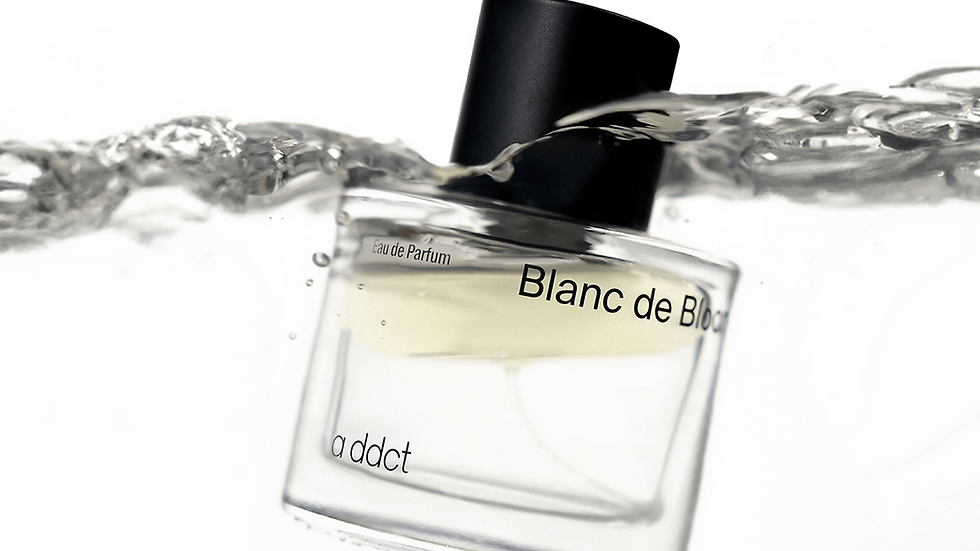
🔹 A•ddct: While the market was flooded with alcohol-based perfumes, Baek launched a fragrance brand focused on "scent essence," prioritizing raw olfactory experiences over traditional branding.
🔹 Growus: Instead of general hair care, he focused on "thalassotherapy" (sea-based therapy) to address specific high-end scalp and hair concerns.
The Lesson: Distinction Over Size
If you cannot be the biggest, be the most distinct. By owning these "side-street" categories, Elleven Corp built a loyal fan base without triggering a defensive response from industry leaders.
Stage 2: Weaponizing Data and the "Hero SKU" (2021–2023)
The turning point for Elleven Corp was its entry into CJ Olive Young, Korea’s dominant H&B retailer. Most brands see a major retailer as just a sales channel; Baek saw it as a data laboratory.
In 2023, the company faced a crossroads: expand the lineup or double down? The internal instinct was to diversify. However, the retail data told a different story. One specific product—the No-Wash Treatment—was showing "stickiness" far beyond its peers.
Baek made the difficult executive decision to postpone new launches and funnel all marketing resources into this single "Hero SKU."
📍 The Result: The product alone generated $3.5M (4.7B KRW) in annual revenue.
📍 The Strategic Lever: This success became the "proof of concept" required to convince global buyers in the US and Japan that the product had mass-market appeal.
Stage 3: The "J-Curve" Gamble (2023–2024)
In 2023, Elleven Corp’s growth appeared to stall. Revenue dipped, and the company posted a loss of roughly 3.1B KRW. To an outsider, it looked like a decline. In reality, it was a Strategic Retreat for Global Expansion.
Baek was aggressively investing in direct overseas subsidiaries and localized marketing. This "calculated loss" paid off. By 2024, Elleven Corp rebounded with a vengeance, hitting 41B KRW in revenue and 4.9B KRW in operating profit. It proved that you often have to take one step back to take three steps forward.

The Future: Decoupling from the "K-Beauty" Halo
Today, Elleven Corporation is valued at over $75M. But Baek is already looking at the next evolution: Strategic Decoupling. He wants his brands—Parnell, A•ddct, Growus—to be recognized for their own merits, not just because they are "Korean."
With a target of 60% international revenue, the company is shifting from a regional player to a global lifestyle powerhouse.
Key Takeaways for Entrepreneurs
✅ Start Small, Think Structural: Your first business doesn't have to be your last, but the lessons in supply and demand are universal.
✅ Let Data Veto Instinct: Don't diversify just because you're bored. Diversify when the data says your current "Hero" has peaked.
✅ Invest in the Dip: Use periods of slow growth to build the infrastructure for the next 10x leap.
The K-Beauty Ecosystem: A Masterclass in Structural Agility
To truly understand the global dominance of K-Beauty, one must look past the marketing and into its infrastructure. The ultimate competitive advantage of this ecosystem lies in the unparalleled agility of Korean ODM/OEM (Original Design/Equipment Manufacturer) networks. This hyper-collaborative web of suppliers, advanced R&D labs, and fast-tracked manufacturers functions as a silent, turnkey engine. It allows indie brands to scale from concept to commercialization at a speed that legacy Western conglomerates simply cannot match.
However, navigating this landscape requires more than just utilizing its supply chain. Success demands a dual mastery: the artistry of cultural storytelling to capture global mindshares, and the precision of data-driven execution to capture shelf space.
Conclusion: The New Blueprint for Global Scaling
Decoding the K-Beauty ecosystem reveals that sustainable growth is never accidental—it is architected. The trajectory of Elleven Corporation serves as a definitive blueprint for the modern beauty brand. By leveraging the ecosystem's operational speed while ruthlessly letting retail data veto creative instinct, Chang-jun Baek successfully bridged the gap between a localized niche and a $75M global powerhouse.
In an industry defined by hyper-competition and shifting consumer loyalties, the ability to execute a calculated pivot is the ultimate survival metric. For the next generation of beauty entrepreneurs, the lesson of Elleven Corp is clear: Build with structural agility, validate with data, and have the courage to invest in your own momentum.


Comments