


The Transformative Journey of Eugene Cha: Bridging K-Food and Global Markets

Years ago at Nestlé, I recall a visit from the Japanese subsidiary to our Korean office. Amidst a room of Japanese colleagues, I was struck by a voice speaking impeccably fluent Korean. It belonged to Eugene Cha, who was then leading the KitKat business unit in Japan and was already recognized globally for her exceptional caliber and operational reach.
Given her trajectory, her move to lead a domestic company’s Oceania subsidiary as Managing Director came as a compelling surprise. I found myself curious about what drove such a bold leap; this interview provided the answer. Her transition was an evolution—a process of harmonizing sophisticated corporate strategy with the raw, gritty details of building a business from the ground up.
The "Managing Director" title she holds today is the dense crystallization of years of silent endurance and a refusal to define her own limits in unfamiliar environments. These insights have now evolved into a definitive management philosophy.
She argues that the globalization of K-food is not about imposing "our taste" on others. Instead, she emphasizes relinquishing the ‘right to reinterpret’—allowing local consumers to play with and integrate products into their own culinary lives. What follows is a record of the strategic insights of a leader who has resolutely carved her own path.
Q: You built a formidable early career as a finance specialist at global powerhouses like Bayer and HP. What was the specific catalyst that led you to expand your scope into the highly volatile fields of strategy and marketing?
Eugene: To be perfectly honest, my career transition wasn't born from a single, dramatic epiphany. Rather, it was the result of a steadily intensifying curiosity regarding "impact."
During my years in finance at Bayer and HP, I never viewed myself as a mere "scorekeeper." I’ve always believed that a premier finance team isn't just an administrative function; they are the true "co-pilots" of the business. We translate raw data into actionable insights, provide navigational guidance before decisions are finalized, and empower leaders to foresee latent risks and opportunities. I deeply valued that partnership.
However, over time, a new question began to take root: "What would it feel like to go beyond guiding the business—to actually architecting the business with my own hands?"
That curiosity pulled my gaze past the financial lens and into the very heart of the operation—where consumer choice, market flux, and brand narratives breathe. The definitive moment of clarity actually came from a conversation with my mother. I realized that while I could explain complex fiscal maneuvers to senior executives with ease, I struggled to explain the tangible "impact" I was making to her. I realized then that I wanted to create something a person outside the corporate walls could touch and feel—something that intersected with daily life.
This move was never a rejection of finance. On the contrary, my background in finance became my most potent strategic asset. When I pivoted to marketing and strategy, I brought with me the discipline to ground creativity in insight, to tether vision to hard numbers, and to transform audacious ideas into sustainable growth. Finance trained me to be a sharper strategist—it taught me how to ask the right questions, challenge underlying assumptions, and keep my feet firmly planted in reality while reaching for high-altitude goals. My journey wasn't a departure from finance; it was a natural evolution built upon the foundations that finance made possible.
Q: While at Nestlé’s global headquarters in Switzerland, you were responsible for group-wide global strategy. After moving to a regional subsidiary, did you encounter any practical instances where a sophisticated "HQ-level" strategy failed to gain traction against local market specificities?
Eugene: During my tenure at the Swiss headquarters, I was a firm believer in the efficiency of global synergy. My role was to develop and deploy sophisticated strategic guidelines and execution toolkits designed to work universally. Back then, when local teams protested that "our market is different," I must admit I sometimes wondered if they were simply resistant to change or lacked the will to execute. I operated under the assumption that the "Big Picture" from HQ was inherently correct.
However, it was only after I moved to the Japanese subsidiary to lead the marketing for KitKat that I painfully realized the true weight of that "difference." It wasn't that the global strategy was fundamentally flawed; it was that without accounting for "micro-details"—such as hyper-complex local distribution networks or the exquisite nuances of consumer preference—a strategy can never truly take root. I learned that the voices from the field weren't making excuses; they were providing the very intelligence required to make a strategy viable.
This experience etched a core leadership principle into my DNA: Balance. I no longer believe in unilaterally pushing a global mandate. Instead, I see my role as a "fine-tuner," ensuring that the overarching global vision serves as a supportive backdrop for local specificities rather than an anchor that drags them down.
This is why I always encourage rising talent to gain experience at both the headquarters and the regional subsidiary levels. It is the only way to evolve into a multi-dimensional leader—one who can marry high-level strategic thinking with the gritty, boots-on-the-ground reality of execution.

Q: An academic background, such as a Ph.D. in Business Administration, can sometimes be perceived as a "heavy burden" or a constraint in the realm of practical leadership. Have there been moments where you had to abandon theoretical perfection and rely solely on raw business instinct and intuition to make a high-stakes gamble?
Eugene: That is an intriguing question. While many perceive a conflict between academia and practice, I have always viewed them as partners in a "three-legged race"—moving in total sync.
To use a more specific metaphor: Business intuition is the compass that determines our direction, while academic theory is the sturdy vessel that carries us across the tumultuous open sea. A compass alone cannot withstand a swallowing wave, and even the most magnificent ship will drift aimlessly without a compass.
For example, when I assumed my role as Managing Director of CJ Foods Oceania, my primary focus was not merely inflating sales figures, but deeply embedding our brand vision and narrative into the local market. My intuition was constantly signaling that we needed to build "trust capital" before chasing immediate revenue. However, to persuade my team and partners to move this massive ship based on that intuition, I needed a clear blueprint, not just a "feeling."
This is where the academic principle that "cognitive distance determines psychological distance" became my navigational chart. It is a common-sense insight—it is difficult to open one’s heart to a stranger. If our brand remained a "foreign outsider" to local consumers, we could never begin the voyage into their daily lives, regardless of our product quality.
Based on this theory, I engineered the strategic message: "Born in Korea, Made in Australia." By bridging "Korean Authenticity" with "Local Reliability," we effectively collapsed that psychological distance. This allowed us to quickly find our course through the unfamiliar waters of Oceania. Ultimately, theory is the sophisticated translator that converts my "wild" intuition into a language others can understand and follow.
Q: After building a robust career within the established systems of Nestlé, you took the helm at CJ Foods Oceania. As the weight of the brand and the nature of your role shifted, what were the most tangible challenges or dilemmas you faced during your first 90 days?
Eugene: Even during my tenure at Nestlé, I always gravitated toward the role of an "Intrapreneur"—someone who thrives on launching new business models—rather than a conventional administrator. Therefore, the challenges I faced at CJ Foods Oceania felt more like exhilarating puzzles than daunting obstacles. My early conclusion was that success would hinge on how effectively I could harmonize our unique "duality."
While CJ is a global titan with vast assets and systems, in the Oceania market, we had to operate with the absolute mindset of a "startup." We needed to use the headquarters’ infrastructure as a sturdy backdrop while remaining as agile as a lean startup on the ground.
To achieve this, I adopted a "Zoom-In, Zoom-Out" strategy. When architecting strategy, I would "zoom out" to survey the market from a macro-managerial perspective. However, the moment a bottleneck appeared in execution, I would "zoom in" deeper than anyone else to co-solve the problem with the team.
Furthermore, to ensure this startup-like agility was aligned toward a single goal, I initiated "Strategy Workshops." We collectively visualized where the company would stand in three to five years and co-authored the specific execution roadmaps to get there.
The most memorable outcome of these sessions was our shared identity as "Captain Cooks of Industry." Just as Captain Cook explored uncharted territories and mapped the Australian continent, we committed to being explorers—investigating unknown markets and consumers to pioneer a new business frontier. Through this process, we successfully captured the "best of both worlds": the structural sophistication of a conglomerate and the lightning speed of a startup.

Q: You are quadrilingual, fluent in Korean, English, Japanese, and French. However, a leader’s influence often stems as much from "what is left unsaid" as from "what is spoken." Having operated across such diverse cultural landscapes, what have you learned about the communication taboos or behavioral pitfalls a global leader must guard against?
Eugene: In Erin Meyer’s The Culture Map, societies are categorized by their communication styles: "High-Context" versus "Low-Context." My career has been a continuous journey of navigating between these two distinct worlds.
Korea and Japan are quintessential High-Context societies. In these cultures, the greatest pitfall for a leader is "contextless bluntness." Delivering cold, hard facts without reading the Nunchi (Korean for subtle social cues) or the Kuuki (Japanese for "the air") can be perceived as rude or socially immature, regardless of how accurate the information may be.
France is equally fascinating; while it is a Western nation, it is a high-context society governed by "nuance." An overly simplistic or dry communication style there can be interpreted as a lack of sophistication, which can inadvertently undermine a leader’s authority.
In sharp contrast, Australia is a textbook Low-Context society. The cardinal sin here is ambiguity—the expectation that a team should "just get it" without explicit instruction. Australian colleagues value intuitive, transparent, and direct communication where the leader’s intent is delivered without filters.
Consequently, in Korea, Japan, and France, I focus intently on "reading the air." In Australia, I pour my energy into "selecting the right words." This is the true language I’ve mastered across four tongues: the art of managing the weight of silence.
Q: You’ve described Australia as a "refreshing" environment for a female leader. Does that choice of words reflect a past need to wear a "mask"—perhaps to hide your true self to gain legitimacy in more conservative cultures like Japan or Switzerland?
Eugene: To understand this, one must look at the historical and cultural scaffolding of those regions. Switzerland is deeply conservative in certain aspects; federal women’s suffrage was only granted in 1971, and one canton didn’t allow women to vote until 1990. The patriarchal corporate culture of Japan is well-documented. During my time in those markets, it was exceptionally rare to even encounter a fellow female leader.
In those societies, there was often an unspoken pressure for female leaders to embody "sophisticated softness" as a primary virtue. We were expected to be the "lubricant" that smoothed over friction rather than the engine driving a forceful agenda. To survive and succeed, I chose to become a "Submarine."
This was actually a nickname given to me by a former boss. It meant that while I appeared calm and silent on the surface, I was charging toward the target with terrifying speed underwater to ensure results. I had to submerge my drive and momentum beneath the waterline just to be effective as a leader.
The reason I find Australia so "refreshing" is that I no longer have to perform the role of a submarine. This is a society where female leadership is normalized across politics, business, and even the military. Here, I don't have to bifurcate my "softness" and my "strength." For the first time, I feel I can lead as my authentic self and be fully respected for it. It is the liberation of being seen without the mask.
Q: The philosophy of a "Mosaic Community" is conceptually beautiful, yet in practice, the sharp edges of diverse pieces often clash, creating friction. While working with a diverse workforce in Australia, have you encountered cultural conflicts or challenging cases where the traditional "Melting Pot" approach—melting everything into one—failed to provide a solution?
Eugene: Ironically, the most significant conflicts often stem from our "internal" preconceptions rather than external factors. As a Korean food enterprise, there was an unconscious conviction among our team members that "the Korean taste is the definitive answer." There was a sense of frustration when locals didn't immediately embrace a product, with the sentiment being: "This is the authentic taste; why don't they recognize it?"
However, in a mosaic society like Australia where diverse cultures coexist, this one-way communication never succeeds. I often tell my team: "We must first 'taste' their culture before they feel inclined to taste our Mandu." Just as a mosaic only reveals a complete picture when differently shaped tiles are precisely interlocked, we must find that alignment.
A great example is an episode involving an intern from India who joined our team recently. When they brought in their homemade lunch, I made a conscious effort to share that meal with the entire team. We used that time to ask questions, learn about unfamiliar spices, and truly enjoy the heat and aromatics of their cuisine. I wanted my team to experience firsthand that when we show genuine curiosity and respect for another's culture, we earn the "common language" necessary to explain our own.
If we had used the "Melting Pot" approach—where everything is melted down to erase individual colors—that intern’s uniqueness would have vanished. But because we embraced the "Mosaic" approach, we were able to see our market through a broader lens thanks to their perspective. Ultimately, "difference" is not a sharp edge to be feared, but a vital piece that makes our collective picture more vibrant.

Q: Managing heritage brands like *Dashida* or *bibigo*—icons of Korean culinary pride—can sometimes cloud cold business judgment with the weight of "national representation." Was there ever a moment where you had to boldly pause a product or completely overhaul a strategy for a beloved Korean staple because it didn't align with the cold realities of the global market?
Eugene: My strategic focus is entirely dedicated to finding the perfect intersection between "Korean food culture" and "local consumer needs." It is essential to coldly evaluate how our culture functions within a local context rather than being consumed by national pride.
For instance, we actively leveraged Australia’s identity as a multicultural society. Because of the strong influence of Chinese migration, Australians are already very comfortable with dim sum and gyoza-style dumplings. Instead of pushing an unfamiliar menu, we led with Mandu—a form factor they already understood—emphasizing local fresh ingredients and convenience to lower the barrier to entry. We didn't just market Kimchi as an "authentic tradition," either. Instead, we aligned it with the keywords Australian consumers are currently obsessed with: "gut health" and "well-being." The response was significantly more enthusiastic.
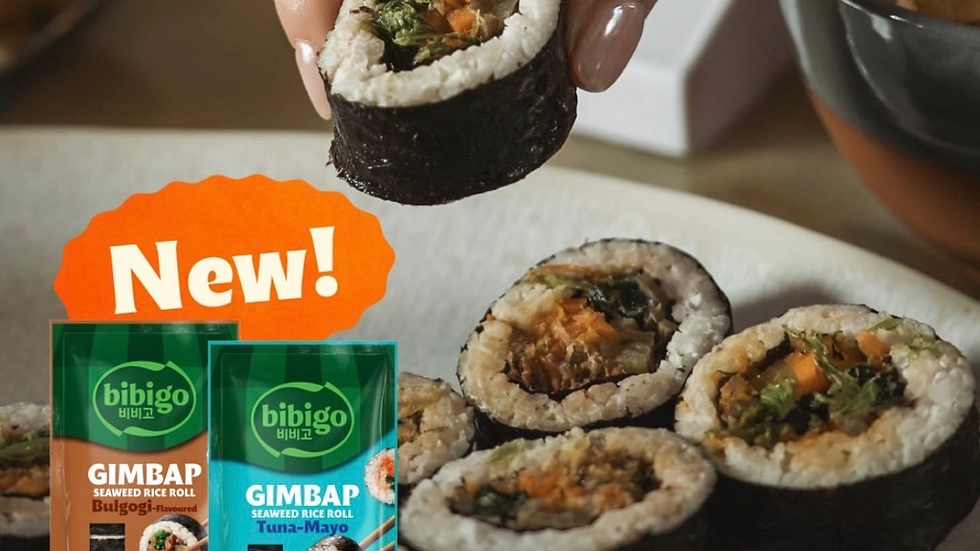
On the other hand, products like "Frozen Kimbap" might still be a niche category for locals. The key here is not to succumb to impatience and prematurely label it a "failure." We must give unfamiliar cultures enough time to naturally "seep" into the local environment.
Rather than abandoning a product based on short-term fluctuations in sales, I play a long-term game—constantly testing the market with new iterations, learning from the feedback, and expanding our "cultural footprint." I believe the ultimate success of a business lies in how naturally our culture can melt into the daily lives of the locals.
Q: Australian consumers are known for being exceptionally open-minded and adventurous with food. Was there a specific "lightbulb moment" where you saw locals enjoying your products in a way that completely defied traditional Korean culinary norms, forcing you to fundamentally re-examine your localization strategy?
Eugene: The most memorable moment was watching a video by a local Australian influencer. She took our Mini Wontons, pan-fried them until they were perfectly crispy, and then stuffed them between slices of toasted bread to create a "Brekkie Sandwich"—a quintessential Australian breakfast!
As a Korean, I had always viewed wontons as a delicate, moist food to be simmered in soup or dipped in soy sauce. I had never once imagined them as a sandwich filling. My initial reaction was sheer surprise, but it quickly turned into an "Aha!" moment. They had reinterpreted the wonton as a "bite-sized, high-protein topping" that paired perfectly with toast. For Australians, the priority wasn't adhering to Korean tradition; it was how conveniently and deliciously the product could melt into their existing daily meal rituals.
This experience taught me a profound lesson: True localization is not about teaching people "how to eat" our food. Instead, the core lies in willingly relinquishing the "right to reinterpret" to the consumer, allowing them to play with our products on their own tables. Whether a dumpling becomes a sandwich filling or a salad topping, if the consumer enjoys it, that is the correct answer. Our role is not to impose a predetermined solution, but to open a stage where our products can write new stories within the context of the local lifestyle.

Q: In the process of forging partnerships with major Australian retailers and corporations like Woolworths or Qantas, were there specific instances where your initial proposals were rejected or met with negative feedback regarding marketability? How did you strategically navigate those business hurdles?
Eugene: Our first encounters with major local retail buyers felt like hitting a very high wall. The feedback at the time was a chilling "It's premature." Their cold assessment was that the Australian market wasn't ready for Korean food, and facing such skepticism toward our marketability felt quite daunting.
However, rather than viewing this as a simple rejection, I took it as a signal that we lacked sufficient evidence to persuade them. For our second meeting, I completely redesigned our strategy by addressing both "emotion" and "logic."
First, I focused on "Intuitive Experience." Instead of a thousand words, I let the product speak for itself through a tasting session. I wanted them to experience the sensory difference in quality that is difficult to capture in a written deck.
Second, I provided "Objective Data." I moved beyond merely asking for shelf space. I used numbers to prove how our products could inject vitality into a stagnant category and, more importantly, how we could drive overall category growth.
Third, I demonstrated our "Capabilities as a Comprehensive Food Enterprise." To establish ourselves as a worthy Asian food partner for Australia’s top retailers, I introduced CJ’s long history and expansive business structure. I showcased our "Integrated Food Ecosystem"—encompassing not just manufacturing, but also food distribution, restaurants, and cafe chains—to instill absolute confidence in our scale and reliability.
Thanks to this multifaceted approach, the buyers set aside their doubts and recognized us as true partners. Interestingly, with the mainstream rise of the "Korean Wave" (Hallyu), the situation has now completely reversed. Buyers are now the ones proactively seeking out and proposing Korean food initiatives. Because we overcame those initial hurdles through a head-on, disciplined approach, we have moved from being a mere supplier to a trusted partner growing the market together.
Q: As a leader with a research background, you place high value on data. However, data is essentially a record of the past. When you must predict and decide the future of food culture in Oceania, how do you strike a balance between cold numbers and your "warm" professional intuition?
Eugene: In truth, I possess no divine foresight to perfectly see through the future of the food industry. However, I define "intuition" a bit differently. I don't see it as an innate sense that strikes out of nowhere; rather, I see it as "Pattern Recognition"—a skill honed through vast datasets and field experience—and the "Power of Interpretation" that reads the context between the numbers.
Living in multiple countries and experiencing diverse food cultures has naturally trained me to view our products through a strictly "outsider’s lens" rather than a Korean one. While I never ignore the data, I strive to read the granular lifestyles of consumers that numbers alone cannot convey, using my experience as a filter.
A practical example of this intuition was our "Kimchi Marketing" in Australia. Following traditional Korean logic, we would have emphasized the "deeply fermented, ripened taste." However, I noticed that local consumers were enjoying Kimchi more like a "salad" than a side dish to accompany rice.
My intuition clicked. I judged that for them, "freshness with a crunchy texture" would be a much more powerful selling point than a heavy, sour ripeness. Consequently, we boldly chose "Fresh" as our core message. Simultaneously, we captured the fact that locals were deeply interested in the nutritional value of Kimchi. We added scientific credibility by featuring interviews with prominent local scientists to prove the efficacy of specific probiotics.
Ultimately, to me, data and intuition are not opposing forces. It is a connected process where intuition (the salad-like crunch) sets the direction, and science (probiotic data) provides the conviction. If intuition is the compass, data is the map; only when the two work together can we navigate toward the future with maximum security and certainty.

Q: From Kobe and Vevey to Seoul and Sydney—this relentless journey of relocation and challenge has built an impressive resume. However, as an individual, it must not have been an easy path. What was the greatest personal sacrifice or resolution you had to endure along the way?
Eugene: The most painful part is, undoubtedly, the time I couldn't sufficiently spend with my family. The title of an expert who combines theory and practice may look glamorous on the surface, but beneath it lies layers of immense patience and consideration from my family.
During the years I was preparing my doctoral dissertation, I was a "time thief" who always felt guilty toward them. Even on family vacations, I was always in a corner with my laptop reviewing my thesis. I even wrote manuscripts for academic conferences while enduring severe morning sickness. My husband, who was also incredibly busy as a finance leader at a major corporation, silently took care of our one-year-old daughter during those grueling times.
The retired supervisors who readily agreed to be interviewed for my research also remain deeply in my memory. Despite being retired, they generously shared the management wisdom they had accumulated over decades. Their insights went beyond mere material for a dissertation; they serve as a "living guidebook" for how I lead my organization today.
Ultimately, my career achievements are never mine alone. My doctorate is a fruit filled with the wisdom and experiences of those who cared for me. I believe my success was only able to bloom upon the soil of the sacrifices and consideration of those around me.
Q: You’ve expressed a vision for Korean cuisine (K-Food) to become a global staple, much like pasta. However, the history of pasta’s democratization shows that original forms were often simplified or altered. What are your thoughts on the potential dilution of K-Food’s "authenticity" as it settles into the global daily diet?
Eugene: I prefer to call it "Cultural Evolution" rather than "alteration." The history of pasta, which we often use as a benchmark, provides a very clear answer to this.
In fact, the world-renowned "Spaghetti and Meatballs" is not an indigenous Italian dish. It is the quintessential product of Italo-American culinary culture, born in the late 19th century when Italian immigrants utilized the abundant meat available in the United States. To an Italian traditionalist, it might have been an alien combination, but it was precisely this bold "variation" that allowed pasta to transcend its ethnic roots and become a global staple for humanity.
Our K-Food is no different. We believe that "red chili powder Kimchi" is an immutable tradition, but this was actually a revolutionary change that occurred after the introduction of chili peppers around the 17th century. For thousands of years prior, our ancestors ate Baek-kimchi (white kimchi) or Dongchimi (water kimchi) without any chili. In other words, what we call "authentic" today is itself the result of a radical fusion that embraced foreign ingredients at the time.
Food is not a relic preserved in a museum. It must constantly evolve within the palates and lifestyles of living people to maintain a powerful vitality. I joyfully welcome Kimchi being topped on Australian avocado toast or Mandu being used as a sandwich filler. The process of K-Food freely mixing with local ingredients on global tables is not a loss of identity; rather, I am convinced it is a grand journey toward taking deeper and stronger roots in the daily lives of people worldwide.

Q: On the day you eventually conclude your journey in Oceania, what is the "Legacy" you wish to have deeply engraved into the organization’s DNA—something that cannot be explained by financial statements or flashy performance metrics?
Eugene: The single legacy I wish to leave behind is not a set of numbers on a balance sheet. Instead, I want to leave our members with the experience of having broken their own limits and expanded their horizons—a sense of "Expanded Confidence."
While CJ is a global conglomerate, we have operated in Oceania over the past few years with the breathless intensity of a startup. Starting with a very small team, we brought factory operations online and pioneered a rugged local market one step at a time. Through this fierce process, I believe every one of our members—not just myself—has grown by transcending their individual boundaries.
Though it won't be recorded in official reports, I hope three spirits remain vivid in our organization’s DNA: First, a Frontier Spirit that does not fear the untrodden path; second, a Challenge Mindset to be the "First" if we cannot yet be the "Best"; and finally, a Steadfast Pride in creating value that only we can provide.
Years from now, I don't want my staff to remember me simply as the Managing Director who increased revenue. I want them to recall, "Because of her, I dared to dream bigger, and together, we made the impossible possible." That burning confidence is, I am certain, the most valuable asset I can leave to this organization.


Comments